Choosing a paver pattern should be more than first impressions. Believe it or not, these patterns reflect a design decision that will influence how your patio, driveway, walkway, or any outdoor space looks five, ten, or even fifteen years from now.
In any serious paver pattern comparison, the real difference between random and repeating layouts is how each pattern responds visually to traffic, weather, minor settling, stains, maintenance, and changing lifestyle needs over time.
All paving stones, from brick to natural stone to concrete, age outdoors. Sunlight, stormwater, freeze–thaw cycles, and daily loads from foot traffic or vehicles gradually alter appearance. The pattern you choose determines whether those changes feel like natural character or visual flaws.
This guide compares random and repeating paving patterns from a long-term performance perspective, helping homeowners understand trade-offs in durability, maintenance, performance, and curb appeal before committing to a design.
Why Pattern Choice Still Matters Years Later
Pattern matters years later because it controls how visible normal wear, weathering, and tiny movements become. Even with a well-built base, proper compaction, grading, and quality concrete pavers, surfaces evolve.
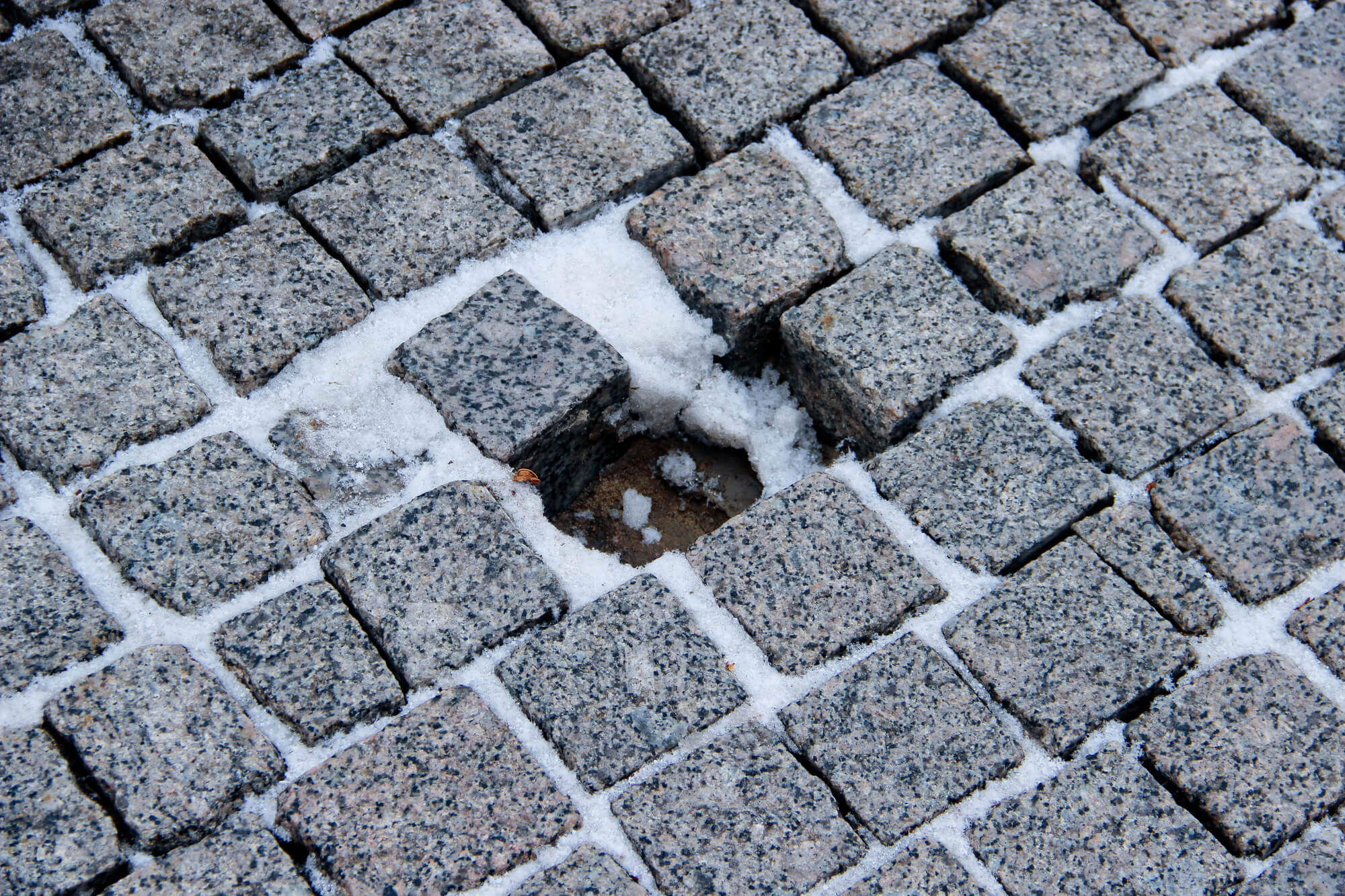
Joint sand shifts slightly. Colors mellow. High-traffic areas suffer from smoothing. None of this means the project is failing, but it does reveal how the paver layout can decide how noticeable those changes become.
A forgiving layout can soften visual wear. A strict grid can highlight it.
That’s why thoughtful design matters from the beginning.
Your Own Taste Shifts Over Time
Besides material, climate, and function, another reason why a paver style might not hold up well in time is the matter of your own taste and changing conditions.
A bare, new landscape can handle a bolder layout and color mix than a mature yard. Trees add shade, shrubs fill in, and nearby homes change. A way to lay your pavers that felt exciting on a fresh plan can feel busy once everything around it has grown in.
For example, simple, quiet patterns made with large-format pavers usually age into the background in a good way. They support the outdoor space instead of competing with plants, furniture, and home’s architectural style.
Busier mixes and very strong design statements can still be beautiful, but they demand more discipline in paver color choice and layout to avoid drifting toward visual clutter as the rest of the yard matures.
Thinking in decades, not just “before and after” photos, leads to choices you’ll be content with much longer.
What Random vs Repeating Patterns Really Mean
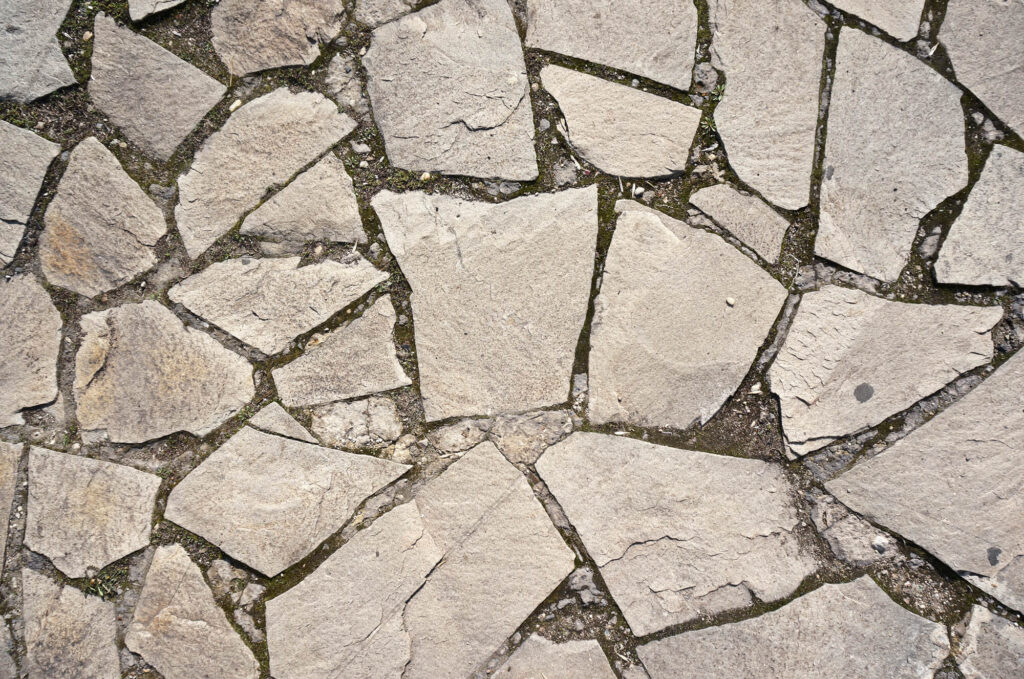
When homeowners hear “random,” they often imagine a free-form installation where pavers are placed instinctively. In practice, true randomness is rare.
Modular “Random” Patterns
Most so-called random layouts are modular paver patterns. Manufacturers provide coordinated units, often medium-format pavers in three or four sizes—typically in square and rectangular sizes—that follow a repeatable laying guide.
These ashlar-style designs:
- Break long joint lines
- Use varied unit sizes
- Minimize small cut pieces
- Maintain structural interlock
- Allow future repairs to blend in
Modular ashlar layouts exist because they give you the visual looseness people like without sacrificing interlock, speed, or future serviceability.
They appear organic, and you get a “random” feel, but they are actually engineered for installation efficiency, durability, and long-term performance.
Repeating Patterns
Repeating paving uses consistent rhythms and clear geometry. Common examples include:
- Running bond pattern — brick-style alternating pavers laid in offset rows, creating clean horizontal and vertical rows across the patio floor or walkway.
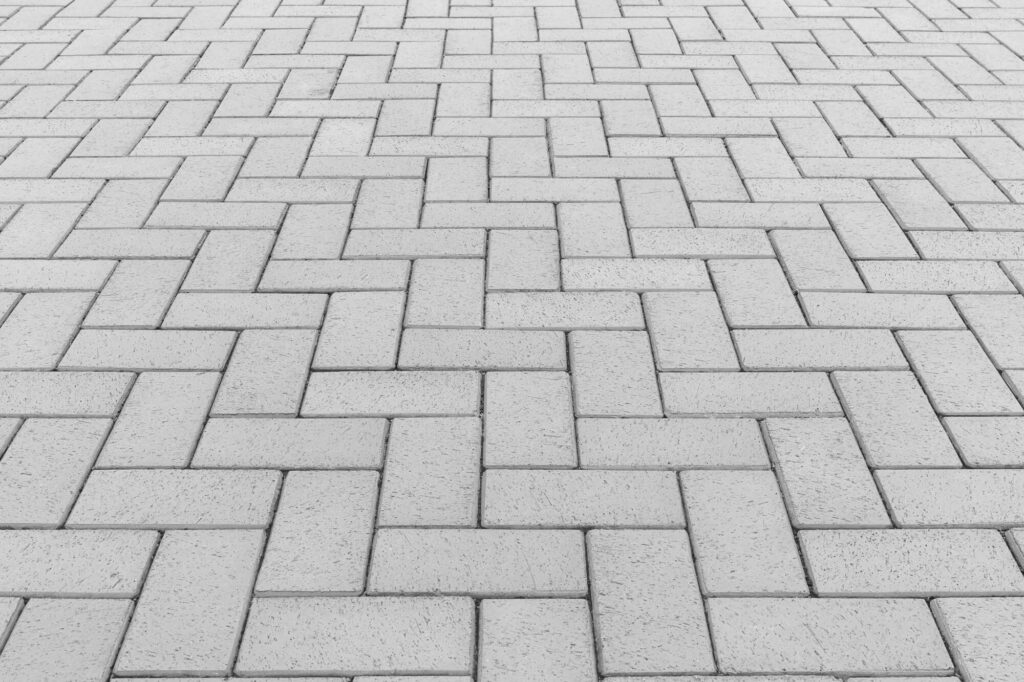
- Herringbone pattern — a zigzag pattern offering high interlock, excellent for driveways and vehicle loads.
- Basket weave pattern — a structured decorative pattern built from square pavers and rectangular pavers arranged in alternating blocks for subtle visual interest
- Stack bond pattern or grid layouts — a precise arrangement of uniform units set in straight, unbroken horizontal and vertical rows, giving patios and walkways a contemporary, structured look.
- Pinwheel pattern— square and rectangular pavers arranged around a central square unit, adding a classic decorative pattern to patios and garden paths
- Soldier borders and edge accents — vertical pavers set upright along edges as accents and borders.
- Circular motifs and decorative insets — focal-point designs that draw the eye to an entry, patio center, or transition zone, often combining curved cuts with contrasting paver colors or sizes.
Each is a popular pattern for good reason — easy to lay, predictable during installation, and visually disciplined. They work especially well in formal entries, pathways, steps, terraces, and street-facing spaces.
A truly freehand layout, by contrast, may be almost impossible to duplicate exactly. That shows up when you extend a paver patio, run a new conduit, or patch a utility cut.
So when you hear “random,” you’re usually looking at a controlled system that only appears casual. That’s good news: you can get the relaxed look you want without giving up structure, efficiency, or future flexibility.
When comparing patio paver patterns, the real difference is not whether one is “better”, but how each performs visually over time.
How Everyday Wear Shows Up Over 5–10 Years
Across patios, walkways, and driveways, most paving projects experience similar changes:
- Slight settling at isolated spots
- Minor jointing sand loss
- Polished traffic lanes
- Surface staining from leaves, grills, vehicles, or planters
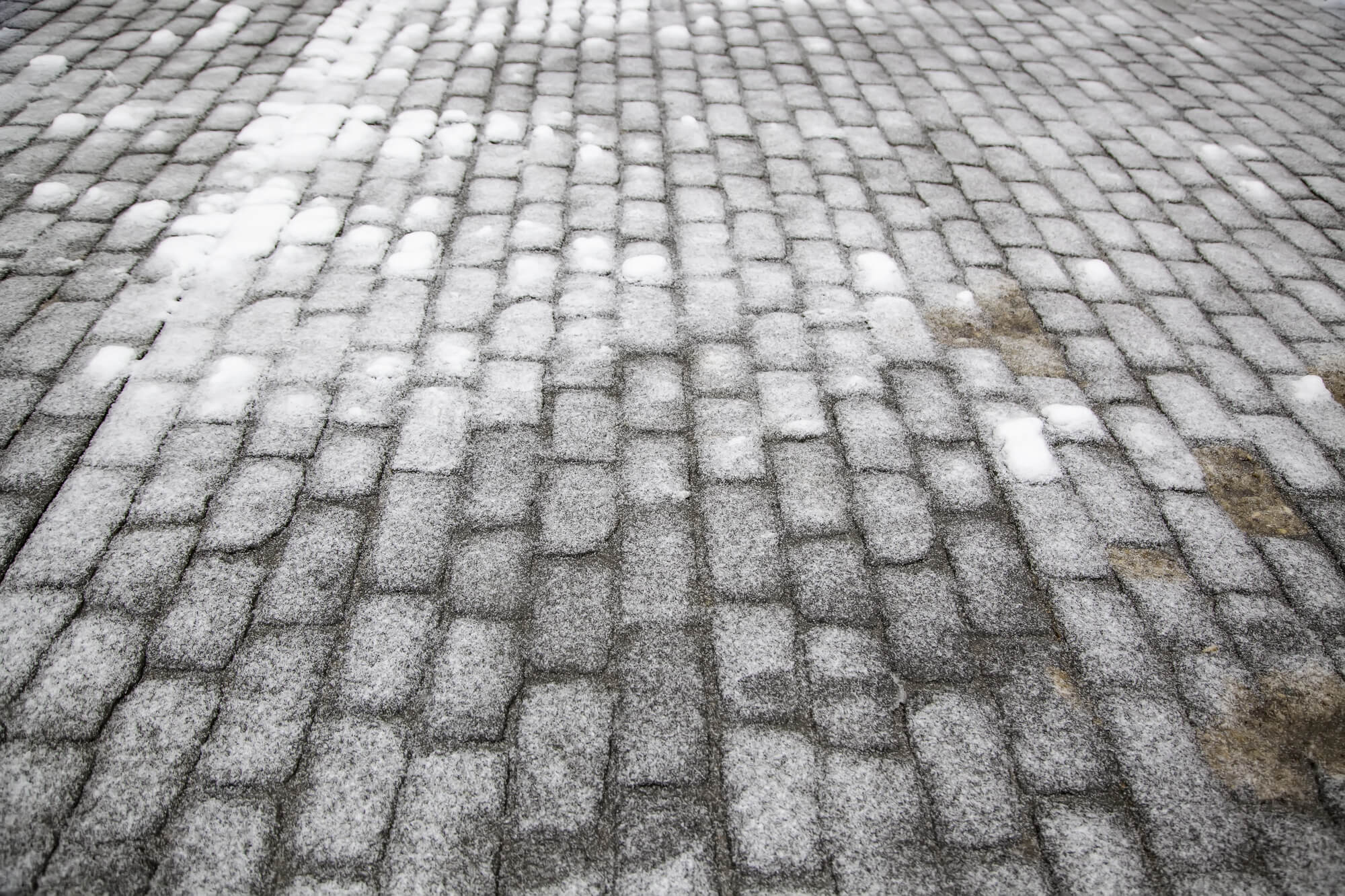
- Subtle shifts from freeze–thaw cycles
On a strict grid design: Long straight joints or large-format pavers create visual lines your eye follows naturally. If one unit dips slightly or a joint opens, it interrupts that rhythm and becomes noticeable.
On a modular random layout: Shorter joint runs and varied unit sizes make those same small changes harder to detect at a glance.
As you can see, while neither system eliminates wear, the pattern determines whether wear reads as texture or a defect.
Color Blends, Materials, and Visual Softness
Color and material selection influence long-term appearance as much as pattern.
Concrete pavers, brick, porcelain, natural stone, and flagstone all weather differently. UV exposure lightens tones gradually. Traffic polishes surfaces. Water runoff may create subtle shading along drainage paths.
Uniform Colors + Strong Grid
A single-color concrete or porcelain field in a tight grid can look clean and modern at installation. Over time, however:
- Tire tracks on a driveway may appear as visible bands
- Drainage paths may underline joint lines
- Stains may contrast sharply
Blended Colors + Broken Lines
Color blends, warm tones, and mixed materials tend to be more forgiving. When combined with ashlar, running bond, or herringbone layouts, subtle variations in shading feel intentional.
This is why many homeowners like the idea of blended pavers for high-use outdoor areas like patios, pool decks, and terraces. The surface remains visually calm even as seasons pass.
How Your Eye Reads Patterns Over Time
Design is not static. A design that felt bold and exciting at installation often calms down once the rest of the landscape matures.
The turf fills in, or artificial turf may replace natural grass in some projects. Plantings grow. Outdoor furniture and seating reshape how a space feels. Even other styles keep tugging at your attention long after the novelty should have worn off. The paver layout itself doesn’t move any faster; your brain simply starts to read it differently.
Your Brain Is Always Hunting for Order
Humans are wired to spot patterns. Even in something close to random, you begin to notice clusters and rhythms. Paver fields are no different:
- Modular random layouts feel familiar and textural
- Strong grids like herringbone pattern or basketweave pattern feel orderly, but can read as institutional if overused
- Bold circular motifs soften once integrated with planting
Matching Pattern to Lifestyle and Setting
- In formal entries, driveways, or front walkways, repeated paving can enhance curb appeal by conveying order and maintenance.
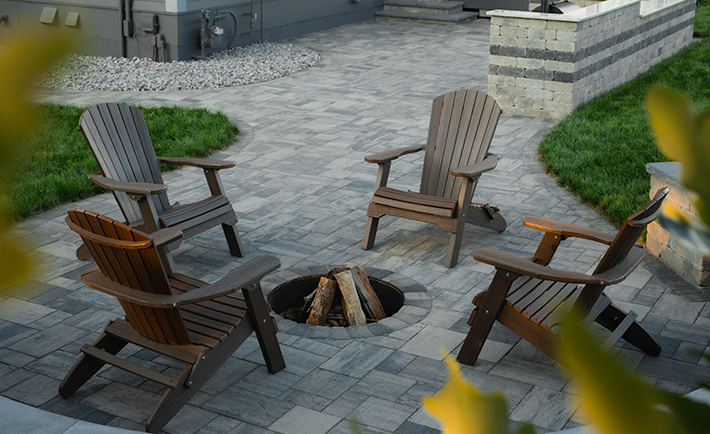
- In private patios and outdoor living areas, random or mixed layouts often feel more relaxed and supportive of lifestyle warmth.
A thoughtful paver pattern comparison considers both immediate appearance and how perception shifts over a decade.
Weathering, Efflorescence, and Surface Aging
All paving materials, from natural stone to porcelain and brick, experience weathering. And while concrete offers the best in durability, versatility, load distribution, and maintenance, it still experiences some degree of weathering.
It’s pattern and color that decide whether the normal effects of sun, water, and use look like gentle ageing or like damage. Choosing a forgiving combination can keep a surface feeling intentional even when life and seasons have clearly happened on top of it.
Among the common effects of time on your paver surfaces are:
- Efflorescence (a light surface deposit) may appear temporarily on sections of concrete units.
- UV exposure lightens tones gradually.
- Stormwater infiltration creates subtle shading.
- Driveway develops slightly smoother tire paths.
- Main walking routes on patio or walkway paving will show more weathering and polish than the edges.
- Edges that catch overspray from pools, irrigation, or roof runoff may color a little differently.
Pattern influences how noticeable these effects become.
- Long uninterrupted joints can emphasize streaks or shading.
- Shorter joint runs, varied unit sizes, and blended colors soften visual impact.
- For permeable pavers, slight surface variation may occur as joint sand or infiltration zones interact with stormwater. In these systems, the benefits of permeability and water quality often outweigh minor visual shifts.
You can’t avoid all weathering and maintenance traces, and you don’t need to. The goal is a surface that still feels coherent and intentional once those normal signs of age arrive.
Pattern and color are big parts of that.
Repairs, Utility Cuts, and Long-Term Flexibility
One of the best things about segmental concrete pavers is that they can be lifted and relayed. Unlike monolithic concrete slabs, pavers can be lifted and reset if utilities, drainage lines, or artificial turf edging need adjustment.
The question then becomes not whether you can repair, but how visible the work will be when you are done.
Pattern plays a major role in how “seamless” repairs and stains look over the long haul.
Repeating Patterns
Running bond, basket weave, and herringbone pattern are straightforward to relay accurately. However, choosing the wrong pattern for a repair section, or misaligning joints during reinstallation, stands out quickly in a strict grid.
Modular Random Patterns
Ashlar and mixed-size layouts provide greater flexibility. Broken joint lines and varied units allow installers to weave repairs back into the field more seamlessly.
If future changes are likely—lighting, irrigation, stormwater drainage upgrades—a modular pattern often offers visual forgiveness.
Expert Planning Tips for Pattern Success
Achieving stunning results with paver patterns requires careful planning. Whether you’re embarking on a DIY patio project, overseeing a comprehensive landscape overhaul, or updating a paver driveway, these expert insights from Rochester Concrete Products will guide you in avoiding typical pitfalls (like cost overruns and waste) and bringing your vision to fruition.
A well-thought-out layout is crucial even before you lay the first stone. From preparing the base to selecting the perfect pattern, here’s a quick overview of how to ensure performance, aesthetics, and endurance like a pro installer.
Begin with a Scaled Blueprint
Before starting, create a scaled blueprint of your project. Utilize RCP’s online visualizers or design software to play with various pattern arrangements, accent positions, and overall layout. Here’s why it’s crucial:
- It illustrates how each pattern manages corners, edges, and borders
- Accurately calculates material needs, reducing unnecessary expenses
- Allows homeowners and contractors to see how the design aligns with the property’s lines, existing features, and surrounding nature
- This initial planning boosts installation efficiency and gives your project a purposeful and dimensional look.
Ensure a Stable Base for Pattern Longevity
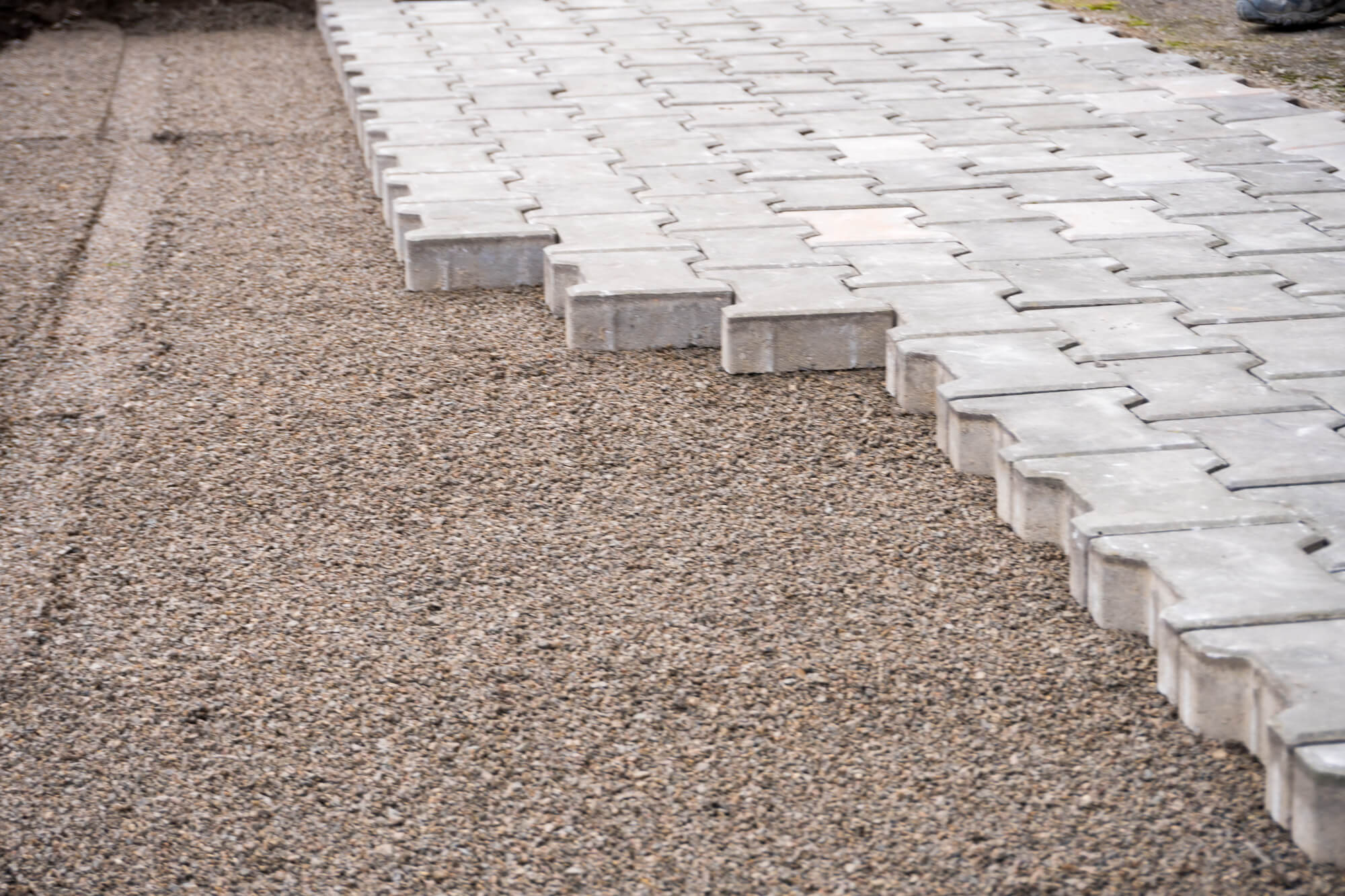
For long-lasting patterns, a solid base is non-negotiable. Inadequate groundwork or base compaction, even if in just one section, can cause uneven settling, shifting, or even surface failures.
Start with thorough excavation and layering of compacted materials to secure paver stability through various weather conditions and seasons.
Installation essentials include:
- Utilizing a minimum of 4–6 inches of gravel base, depending on the application
- Layer-by-layer compaction with a plate compactor
- Applying leveling sand and screeding evenly to prevent depressions
- For patios and garden paths, use edge restraints to secure patterns
- In a driveway or areas with heavy loads, invest in geotextile fabric to prevent soil movement.
A robust foundation ensures your selected pattern, be it basketweave or chevron, remains as appealing as it was envisioned.
Pattern and Performance in High-Load Areas
- For any driveway, street, or area supporting vehicle loads, structural performance becomes critical. Herringbone remains a preferred option because its interlocking design distributes compressive strength and slip resistance across multiple units. The angled layout resists shifting under braking and turning forces. Additionally, the eye doesn’t fixate on every small track or shading change.
- For patios and terraces that support seating and foot traffic, load demands are lower. Here, it’s easier to prioritize aesthetic preferences over other considerations, which often drives pattern choice.
Understanding these trade-offs ensures long-term durability matches intended use.
Budget and Maintenance Considerations
In most residential projects, installation cost differences between random and repeating patterns are minimal when using the same materials.
However:
- More complex patterns like circular motifs may increase labor
- Mixed materials require more layout precision
- Permeable options require specific base preparation
Maintenance expectations include:
- Occasional joint sand top-ups
- Periodic cleanup of stains or moss
- Proper drainage management
- Avoiding excessive runoff concentration
Over time, forgiving patterns may reduce perceived upkeep because small imperfections are less visually obvious.
Matching Pattern to Project Goals
When evaluating multiple laying patterns in a paver pattern comparison, consider:
- Is this space formal or relaxed?
- Is curb appeal a primary goal?
- Will the project likely expand later?
- Are permeable options required because of infiltration or stormwater rules?
- Does soil texture or climate require enhanced drainage design?
- Will the area support vehicles or primarily foot traffic?
For driveways, front entries, and highly visible areas, repeating patterns often provide a clean, structured design.
For patios, pathways, and garden spaces, modular random patterns typically provide softer long-term visual resilience.
Ready to Choose a Pattern You’ll Still Like in Ten Years?
The best pattern is the one that still feels calm and intentional years later. Concrete pavers and concrete with porcelain all offer design flexibility. The key is balancing structure, durability, and aesthetic longevity.
The fact that you’re comparing random and repeating patterns instead of just picking whatever is on the pallet means you’re already thinking like someone who wants their paver project to last. The next step is to match what you’ve learned here to your specific site, climate, and paver system, and that’s where quality concrete pavers prove their worth.
Taking your time to use the extensive Rochester Concrete Products resource library for consultation before installing can help match:
- Material selection
- Pattern choice
- Base design
- Drainage strategy
- Color blends
- Installation process
And with proper guidance, your paver project idea can deliver strong long-term performance, reliable durability, and lasting curb appeal, without feeling dated or visually busy as your outdoor space evolves.