For decades, urban development has relied heavily on surfaces like concrete slabs, asphalt, and other forms of impervious pavement that shed rainwater as quickly as possible. While effective for load-bearing strength, these systems create a serious side effect: stormwater runoff.
As urbanization increases, so does the strain on storm drains, local waterways, and water resources. Stormwater runoff carries pollutants into rivers and lakes, contributes to erosion, and increases flood risk. The US Environmental Protection Agency (EPA) has long identified impervious surfaces as a major contributor to water quality challenges under the Clean Water Act and the National Pollutant Discharge Elimination System (NPDES).
Permeable pavers offer a smarter solution.
Unlike traditional concrete or brick pavers installed over a sealed base, permeable pavement systems allow water infiltration directly through the surface. Instead of rushing toward storm drains, rainwater filters through joint aggregate into an engineered stone reservoir below.
Permeable pavers’ benefits go beyond drainage. They support flood mitigation, erosion control, sustainability goals, and long-term hardscape performance, making them increasingly important in environmentally responsible landscaping and low-impact development strategies.
Let’s begin with how permeable pavement actually works.
What Are Permeable Pavers?
Permeable pavers are interlocking pavers designed to allow water to pass through the surface rather than run off it.
Unlike impervious pavement, which blocks infiltration, permeable pavement systems use open joints or permeable materials to create controlled hydraulic pathways for stormwater management.
While permeable pavers refer to several materials used for individual units, permeable concrete pavers are the standard in hardscaping and the best alternative to traditional impermeable systems.
How Permeable Pavement Differs from Traditional Surfaces
Permeable pavers differ from traditional pavement solutions, such as:
- Concrete slabs
- Asphalt
- Porous asphalt
- Standard brick pavers over compacted sand
While those mostly impervious pavement systems are designed primarily for structural support and surface durability, they have resulted in impervious surfaces that accelerate runoff, increasing pressure on municipal infrastructure. In cities like Milwaukee, runoff ultimately flows toward Lake Michigan, carrying contaminants from roads and driveways.
Permeable pavement systems, by contrast, combine load-bearing strength with water management.
These systems typically consist of:
- Surface-level permeable concrete units or brick pavers
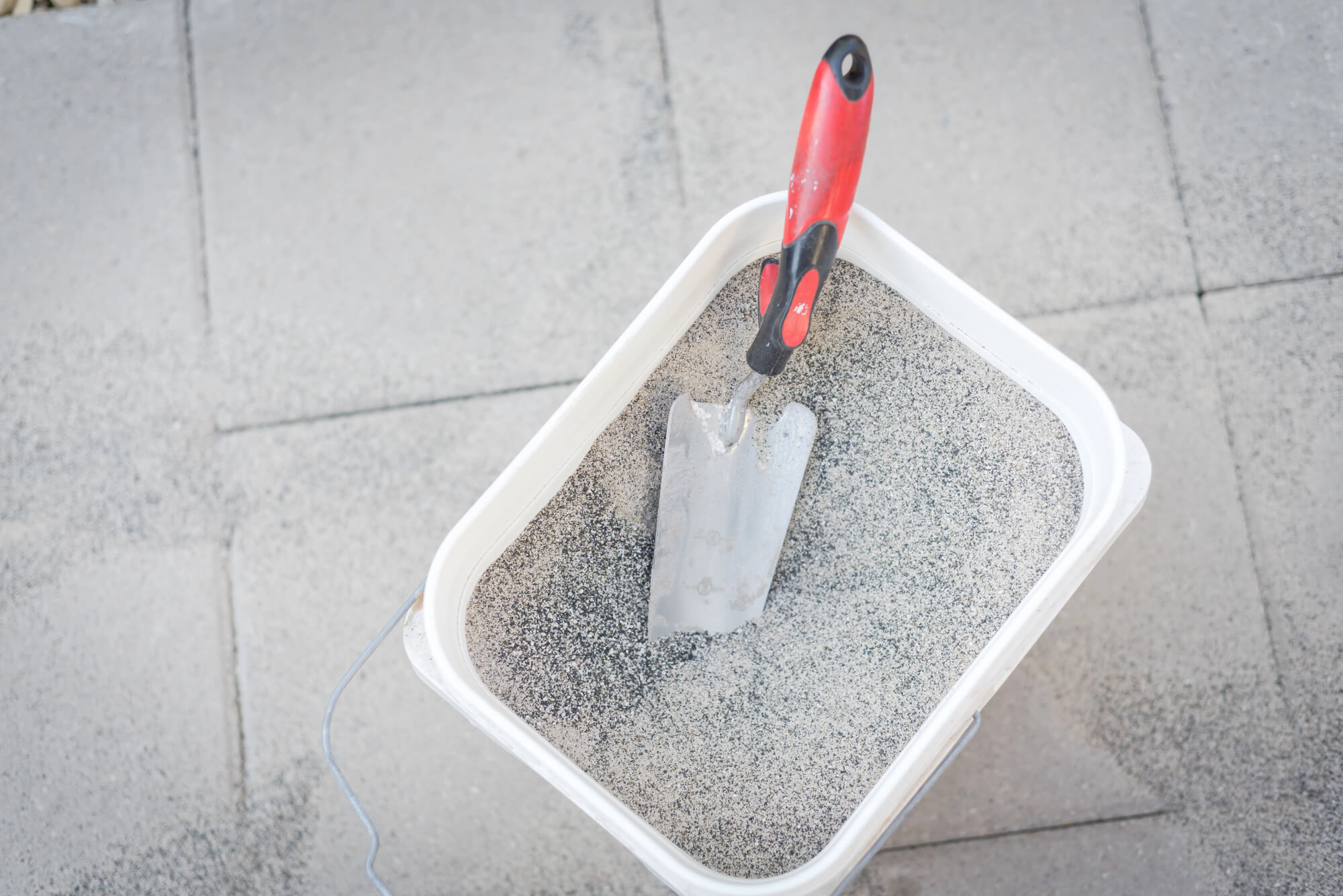
- Joint aggregate that promotes water infiltration
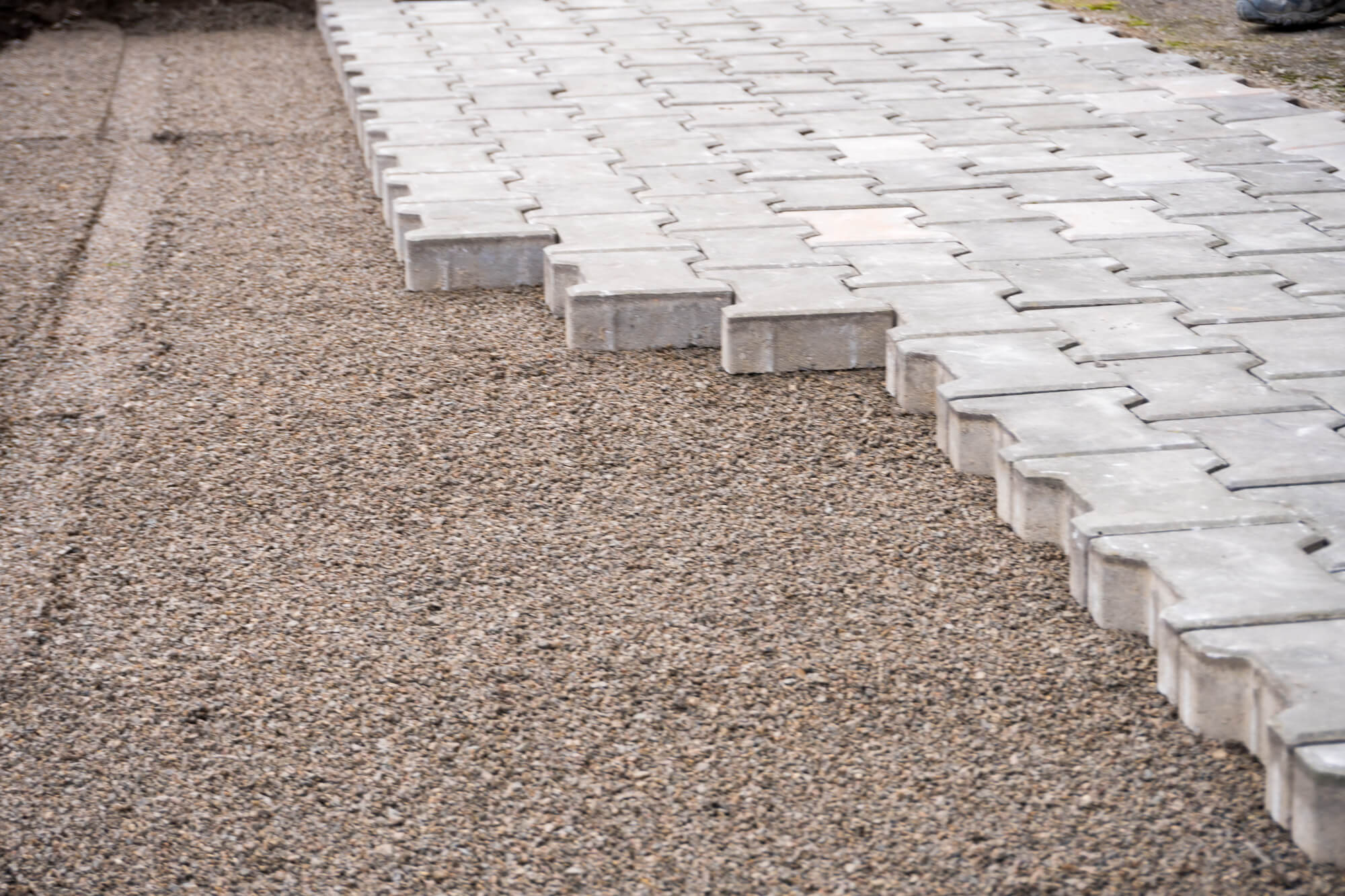
- An open-graded crushed stone base layer
- A deeper stone reservoir for hydraulic control
- Underlying soil capable of absorption
When rain falls on permeable pavement, water flows between the joints rather than across the surface. It moves through the permeable materials into the aggregate base, where it is temporarily stored before slowly infiltrating into the soil below.
And unlike other pervious pavement systems such as porous asphalt or pervious concrete, which rely on voids within the material itself, permeable concrete interlocking pavers use engineered joint spacing and a structural aggregate base to manage water.
Where Permeable Pavers Fit in Modern Landscape Design
Today’s landscape design must balance:
- Performance
- Sustainability
- Load-bearing strength
- Aesthetic appeal
Permeable pavement surfaces accomplish this in driveways, overflow parking areas, walkways, and other hardscape applications where stormwater runoff is a concern.
As they promote water infiltration and reduce surface temperature buildup, permeable hardscape installations support environmentally responsible landscaping in both residential and commercial projects.
How Permeable Pavement Systems Manage Stormwater
At the core of the benefits of permeable pavers is one critical function: controlled stormwater management.
1st Stage: Surface-Level Water Infiltration
When rain falls on porous pavements, water enters through open joints filled with clean aggregate. Unlike impermeable concrete or asphalt, the surface does not create sheet flow toward storm drains that can potentially overwhelm drainage systems or contribute to erosion control challenges.
This allows immediate water infiltration at the point of contact. This is particularly important in urban development for drier regions, where increasing impervious surfaces limit natural absorption.
2nd Stage: Temporary Storage in the Aggregate Reservoir
Below the pavers lies an open-graded stone base designed specifically for stormwater management. This layer acts as a storage reservoir. Rainwater is temporarily held within the void spaces of the aggregate before slowly infiltrating into the underlying soil.
In many municipal monitoring facility studies, including research referenced by agencies like the Wisconsin Department of Natural Resources, permeable pavement systems have demonstrated measurable reductions in runoff volume and pollutant transport.
3rd Stage: Natural Filtration and Water Quality Improvement
As water moves through the permeable materials and stone layers, sediment and pollutants are filtered out before reaching groundwater or nearby water bodies.
This filtration process improves water quality by reducing:
- Suspended solids
- Hydrocarbons from driveways and parking areas
- Nutrient loading
- Surface debris
Compared to more traditional pavement, which channels untreated runoff directly into storm drains, permeable pavers provide an additional layer of environmental protection.
Key Benefits of Permeable Pavers
Beyond stormwater control, permeable pavers benefits extend to durability, structural performance, and long-term maintenance advantages.
Here are the most important benefits to consider.
1. Reduced Stormwater Runoff and Flood Risk
By allowing water infiltration directly into the base system, permeable pavers significantly reduce stormwater runoff compared to impervious surfaces.
This helps:
- Lower flood risk in residential neighborhoods
- Reduce soil erosion around landscaping
- Minimize stress on aging stormwater systems
- Improve community-level stormwater management
For driveways, overflow parking areas, and hardscape installations in urbanized regions, this benefit is increasingly valuable.
2. Improved Longevity Compared to Concrete Slabs
Traditional concrete slabs and asphalt surfaces are prone to:
- Thermal-expansion cracking
- Surface scaling
- Frost heave damage
- Soil displacement beneath the slab
Permeable interlocking pavers offer structural flexibility. Because they are modular units rather than one continuous impervious surface, they accommodate minor ground movement more effectively.
This reduces cracking and makes localized repairs simple. Individual paving stones can be removed and replaced without demolishing the entire hardscape.
The result is improved long-term durability.
3. Reduced Urban Heat Island Effect
Large areas of impervious pavement, especially concrete and asphalt, contribute to the urban heat island effect by absorbing and radiating heat.
Permeable interlocking concrete pavement:
- Allows evaporative cooling through water infiltration
- Reduces surface temperature buildup
- Supports more comfortable outdoor living spaces
This makes permeable paver systems an increasingly popular choice in sustainable landscaping and eco-friendly landscaping projects.
4. Environmental and Regulatory Advantages
For developers and property owners, the benefits of permeable pavers also include regulatory flexibility.
Permeable pavement may:
- Reduce required stormwater infrastructure
- Support compliance with U.S. EPA guidelines
- Align with local and state resource standards
- Help projects meet low-impact development criteria
As sustainability and water conservation become priorities in landscape design, permeable pavement is no longer just a niche option but a strategic solution.
5. Reduced Surface Issues
By reducing standing water, permeable pavers may also:
- Limit mosquito activity
- Support pest control efforts
- Reduce algae buildup
- Minimize erosion at hardscape edges
6. Effective Drainage with Minimal Maintenance
Properly installed permeable pavers require periodic maintenance, such as:
- Occasional vacuum sweeping to prevent clogging
- Avoiding fine sand contamination
- Monitoring joint aggregate
However, compared to porous asphalt or pervious concrete, which can experience surface deterioration, interlocking permeable concrete pavers offer simpler maintenance and longer service life.
Because the system is modular, repairs are targeted rather than disruptive.
When maintained properly, permeable paver systems deliver durable drainage performance while supporting environmentally responsible hardscape design.
Where Permeable Concrete Pavers Perform Best
At this point, let’s clarify something: Permeable concrete pavers are not limited to niche environmental projects.
They are engineered permeable pavement systems designed for a broad array of both residential and commercial hardscape installations.
When properly installed, they combine load-bearing strength with hydraulic control, making them suitable for a wide range of applications.
Residential Driveways and Hardscape Installations
For residential property owners, permeable concrete pavers are increasingly popular for:
- Driveways
- Walkways
- Overflow parking
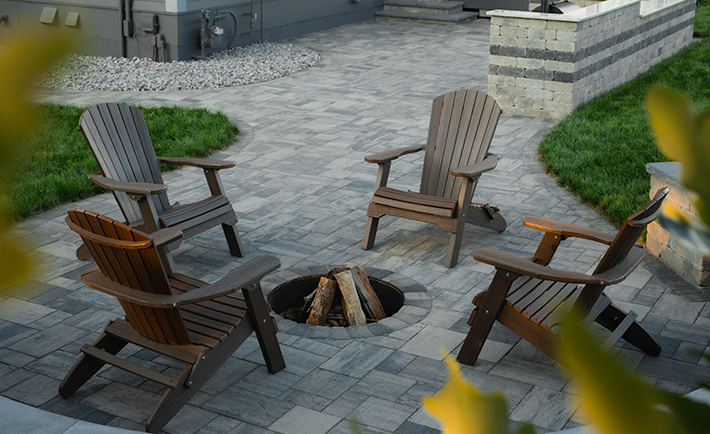
- Outdoor living spaces
- Eco-friendly landscaping upgrades
A permeable paver driveway reduces standing water, improves drainage, and minimizes stormwater runoff that would otherwise flow toward storm drains.
In regions affected by frost heave or seasonal frost layer movement, permeable pavement systems can also reduce soil displacement and cracking compared to a rigid concrete slab.
Commercial and Heavy Vehicular Applications
Permeable pavement is widely used in commercial urban development projects where stormwater management requirements are strict.
Applications include:
- Commercial driveways
- Parking lots
- Municipal projects
- Overflow parking areas
- Mixed-use developments
These options allow developers and property owners to meet stormwater goals without sacrificing design or durability.
Sustainable Urban Development Projects
In areas experiencing rapid urbanization, impervious pavement increases stormwater runoff and contributes to the urban heat island effect.
Permeable pavers help mitigate these issues by:
- Supporting low-impact development strategies
- Aligning with sustainable practices
- Contributing toward LEED credits
- Supporting environmentally responsible landscaping
- Reducing infrastructure strain on storm drains
For projects undergoing municipal plan review, incorporating permeable pavement may reduce the need for oversized detention systems and demonstrate compliance with water management standards encouraged by the U.S. EPA and state agencies.
Additionally, as climate change intensifies rainfall events, permeable pavement systems are becoming an essential component of resilient urban design.
The Rochester Permeable Paver Solutions for All Applications
Rochester Concrete Products offers engineered solutions for any residential, commercial, or demanding environments that call for permeable concrete pavers:
- Holland Eco™ Paver: Designed specifically as a high-flow-rate eco-friendly permeable paver, Holland Eco™ is ideal for commercial and heavy vehicular applications. It is palletized for machine installation, supporting efficient large-scale installation processes while maintaining hydraulic performance and load-bearing strength.
- Pacific-Eco™ Paver: Also designed as a high-flow eco-permeable paver, Pacific-Eco™ performs well in commercial applications and heavy traffic areas. Like Holland Eco™, it supports mechanical installation and robust stormwater management.
- Cobble Stone™: With a textured surface and irregular edges that recreate the look of a centuries-old European boulevard, Cobble Stone™ features an open joint design ideal for eco-friendly, permeable applications. It blends aesthetics with permeability, making it suitable for landscape design projects where visual appeal matters as much as sustainability.
Maintenance and Long-Term Performance
One common misconception about permeable pavement is that it requires excessive maintenance.
In reality, properly installed permeable pavers are durable and manageable with routine care.
The most important maintenance consideration is preventing sediment from clogging the joint aggregate layer.
Recommended maintenance practices include:
- Occasional vacuum sweeping
- Avoiding fine sand contamination
- Monitoring joint fill levels
- Inspecting drainage performance after heavy rain
Compared to porous asphalt pavement or pervious concrete, which can degrade or clog at the surface, permeable interlocking pavers allow individual units to be removed and replaced if necessary.
Permeable Pavers vs. Traditional Impervious Surfaces
To fully understand how permeable pavers work and the benefits they deliver compared to non permeable alternatives, here is a quick rundown and direct comparison between permeable paving systems and impermeable surfaces across common applications including driveway installations, parking lot construction, and commercial landscaping projects.
Traditional impervious surfaces including traditional asphalt, concrete or asphalt pavement, and standard block paving:
- Shed rainwater rapidly without allowing infiltration into the underlying stone reservoir or subbase
- Increase stormwater runoff beyond what natural landscapes would generate
- Require extensive storm drain infrastructure to manage concentrated flow from non permeable pavement
- Are prone to cracking and soil displacement under freeze-thaw cycles and traffic loading
- Contribute to the urban heat island effect through heat-absorbing porous concrete pavement alternatives being unavailable
Permeable concrete pavers and permeable interlocking concrete pavers in properly designed permeable paving systems:
- Allow controlled water infiltration through the paver surface and into the underlying stone reservoir where it is stored and released gradually
- Reduce runoff at the source across every permeable driveway, parking lot, and paver installation in the system
- Improve water quality by filtering pollutants through the aggregate layers of the permeable pavement before water reaches the groundwater table
- Support groundwater recharge through porous pavement design that mimics natural infiltration
- Align with low-impact development goals that permeable asphalt and porous concrete pavement systems also support in different application contexts
- Offer modular repair options that traditional asphalt and poured concrete or asphalt pavement cannot match — individual concrete pavers in permeable interlocking concrete pavers installations can be removed and reset without disturbing the broader paver installation
- Reduce long-term cracking risks compared to rigid porous concrete pavement or traditional asphalt systems
While impervious pavement prioritizes surface strength alone, permeable concrete pavers and permeable interlocking concrete pavers integrate structural performance with environmental responsibility across every application from paver driveway installations to large-scale parking lot and commercial landscaping projects.
Smart Water Management Starts at the Surface
As urban development expands and rainfall intensity increases due to climate change, responsible stormwater management through permeable paving systems, porous pavement, and thoughtfully designed landscaping becomes more important for every property type from a residential permeable driveway to a commercial parking lot.
Permeable pavers provide a practical solution for how permeable pavers work in real-world conditions — capturing rainfall at the surface, directing it through the paver installation and into the underlying stone reservoir, filtering it through aggregate layers, and releasing it gradually into the subgrade or collecting it for reuse rather than sending it directly into overburdened storm drain systems.
For residential paver driveway projects, commercial parking lot installations, and environmentally responsible landscaping initiatives, permeable pavement systems including permeable interlocking concrete pavers, permeable asphalt, porous concrete pavement, and porous pavement of various types offer both performance and environmental value that non permeable and traditional asphalt alternatives cannot provide. Permeable interlocking concrete pavers in particular offer the combination of block paving aesthetics, structural durability, and stormwater management performance that makes them the preferred choice for architects, engineers, and contractors designing permeable paving systems for demanding applications.
At Rochester Concrete Products, we manufacture high-quality concrete pavers engineered for durability and stormwater management when properly installed. Our Holland Eco, Pacific-Eco, and Cobble Stone permeable options provide solutions for residential permeable driveway and paver driveway applications and commercial parking lot and landscaping projects alike.
If you are considering permeable pavers for a driveway, parking lot, patio, or landscaping project:
- Consult a qualified contractor familiar with permeable pavement installation requirements including subbase preparation, underlying stone reservoir design, and paver installation specifications for permeable interlocking concrete pavers in your specific application
- Review the local municipal plan review guidelines for porous pavement and permeable paving systems, including any requirements specific to permeable asphalt or porous concrete pavement alternatives in your jurisdiction
- Visit Rochester Concrete Products to explore eco-friendly concrete pavers, porous pavement options, and technical resources for permeable driveway, block paving, and parking lot paver installation projects
The right hardscape does more than support traffic. It protects water resources through porous pavement and permeable paving systems designed around the underlying stone reservoir principle, supports sustainable landscaping and low-impact development practices, and helps build resilient landscapes that last across decades of paver driveway, parking lot, and commercial application use.