Become a Pro on Selecting Pavers for Midwest Climate Conditions
When homeowners begin shopping for a new paver patio, driveway, walkway, or pool deck, they often focus on the most visible aspects of a paver: color, shape, texture, and price.
While aesthetics are important, the real test for all paver types begins years after installation.
Will it still look good after ten Minnesota winters?
Will it resist deicing salts used on an Illinois driveway?
Will it withstand freeze and thaw cycles in North Dakota?
Will colors remain vibrant after years of sun exposure and harsh weather conditions?
The answers to these questions are what truly determine the long-term value of your paver installation.
Across Minnesota, Wisconsin, Iowa, Illinois, Nebraska, North Dakota, and South Dakota, hardscape products face some of the harshest environmental conditions in North America.
Temperatures can swing more than 100 degrees between seasons. Hardscape surfaces may freeze and thaw dozens of times each year. Snow, ice, moisture, chemicals, and UV exposure constantly challenge outdoor materials.
The good news is that today’s premium concrete pavers, like those from Rochester Concrete Products, are engineered specifically to handle these conditions.
The challenge for homeowners and contractors is understanding which characteristics separate a premium-performing paver from one that may struggle over time.
The Biggest Threat: Freeze-Thaw Cycles
When evaluating pavers for outdoor areas in northern climates, it is important to understand the primary cause of deterioration.
It is not the cold temperatures themselves.
It is water.
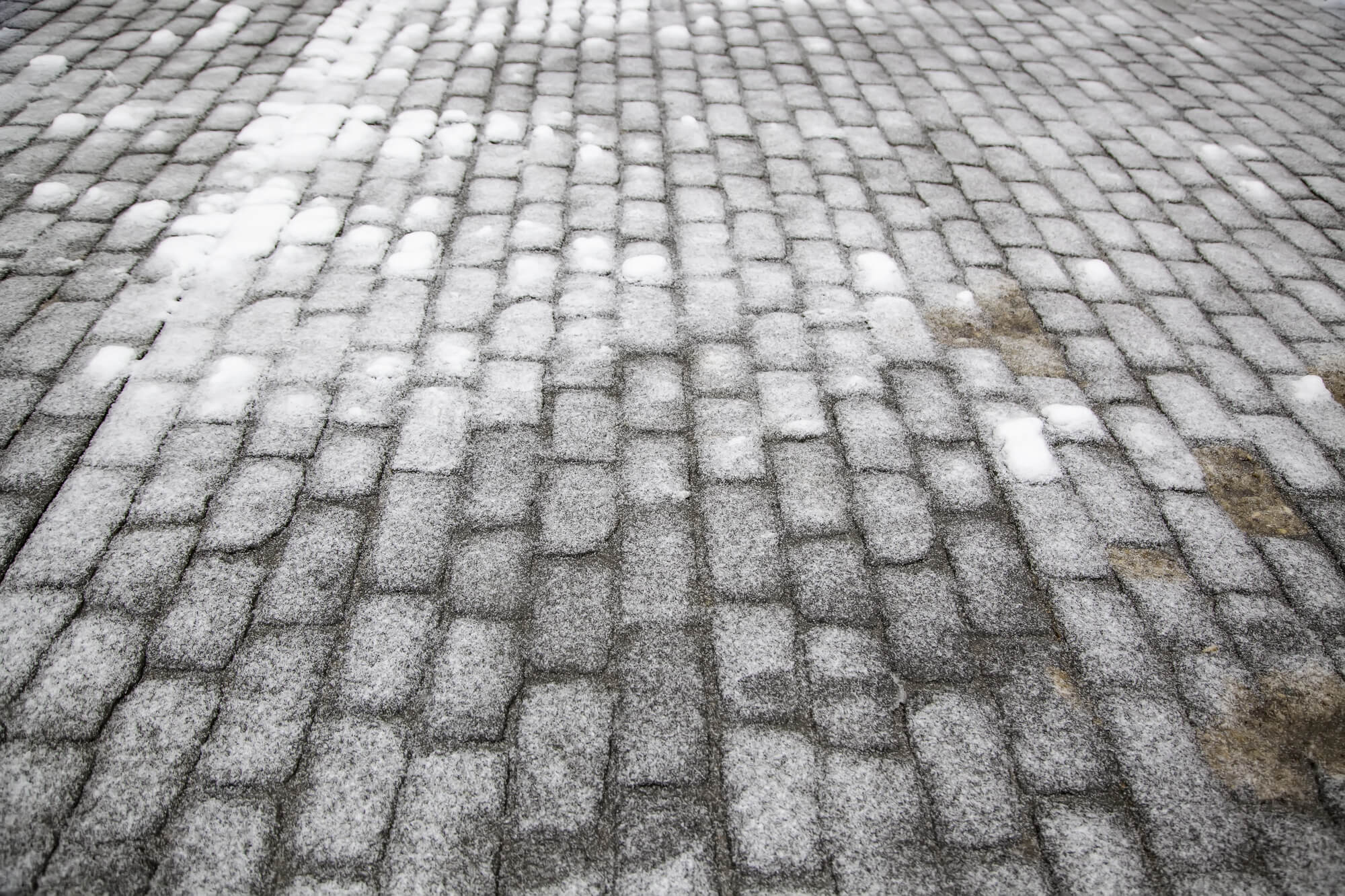
When water enters the surface of a paver and temperatures drop below freezing, that water expands approximately 9 percent as it turns to ice.
Repeated expansion and contraction, known as freeze and thaw cycles, can eventually cause:
- Surface scaling
- Spalling
- Chipping
- Cracking
- Loss of color layer
- Reduced structural integrity
The ability of any pavement product, especially interlocking pavers, to resist moisture intrusion is one of the most important indicators of long-term durability in your hardscaping.
All concrete slabs, clay brick pavers, natural stone pavers, or concrete pavers will be exposed to these freeze and thaw cycles throughout their lifetimes.
That is why the best-performing paving stones focus on four key characteristics:
- Density
- Water Absorption
- Compressive Strength
- Surface Quality
Density: The Foundation of Durability
A dense paver is generally a durable paver.
Density refers to how tightly packed the concrete structure is after manufacturing or how naturally dense they are, in the case of natural stone pavers.
When a paver has a dense internal structure:
- Less water can penetrate the surface
- Fewer voids exist inside the concrete
- Freeze-thaw damage is minimized
- Surface wear resistance improves
- Staining resistance increases
Think of density as the difference between a tightly packed hardwood and a soft sponge.
The denser the material, the more difficult it is for water and contaminants to enter.
In northern climates, density is often one of the strongest indicators of long-term performance and freeze/thaw durability in most building and landscaping materials.
Premium manufacturers invest heavily in production equipment, aggregate selection, vibration systems, and mix design to maximize density.
Water Absorption: Perhaps the Most Important Measurement
If there is one performance metric that deserves more attention, it is water absorption.
Water absorption measures how much moisture a paver can absorb relative to its weight.
The lower the absorption rate, the better.
Why?
Because every percentage point of absorbed water becomes potential pressure during freezing and thawing cycles in winter.
A paver with lower absorption:
- Resists freeze-thaw damage better
- Is less susceptible to spalling
- Better withstands deicing chemicals
- Maintains appearance longer
- Typically experiences fewer surface defects
When comparing pavers for your outdoor space, property owners and contractors should always ask for water absorption test data.
Many premium concrete pavers achieve absorption levels significantly lower than industry requirements.
In northern climates, lower absorption is often one of the strongest predictors of long-term success.
Compressive Strength: Why It Matters
Compressive strength measures a paver’s ability to withstand loading forces.
While many people associate compressive strength with its capacity to withstand vehicle traffic, it also contributes to overall durability.
Higher compressive strengths generally provide:
- Better resistance to impact damage
- Improved edge integrity
- Greater wear resistance
- Reduced susceptibility to surface deterioration
A stronger paver is typically a denser paver.
And a denser paver generally also performs better in freeze-thaw environments.
Premium manufacturers often achieve compressive strengths far exceeding minimum industry requirements in load capacity.
While homeowners may never notice the difference on day one, they often notice the difference ten years later.
Surface Quality: The Most Overlooked Performance Factor
Many paver discussions focus on strength and absorption.
But surface quality may be equally important.
The surface of a paver serves as its first line of defense against the elements.
A tightly closed surface structure helps:
- Shed water more effectively
- Resist staining
- Improve color retention
- Reduce salt penetration
- Minimize freeze and thaw cycle damage
This is where manufacturing technology becomes especially important.
Not all pavers are made the same way.
How Do Concrete Pavers Compare to Other Hardscape Materials?
When selecting pavers for Midwest climate conditions, homeowners often compare concrete pavers against natural stone, clay brick pavers, and poured concrete slabs.
Each material offers advantages, but performance during repeated freeze and thaw cycles can vary significantly.
Concrete Pavers
Premium interlocking concrete pavers are specifically engineered to handle harsh weather conditions. Their individual units allow slight movement during seasonal ground shifts, reducing the likelihood of large cracks forming across the surface.
Benefits include:
- Excellent freeze-thaw durability
- Easy repair if individual units become damaged
- Wide variety of colors, textures, finishes, and styles. Many can successfully imitate natural stone or clay.
- Suitable for patios, driveways, walkways, pool decks, and outdoor living spaces
- Lower long-term maintenance costs compared to many alternative surfaces
Natural Stone Pavers
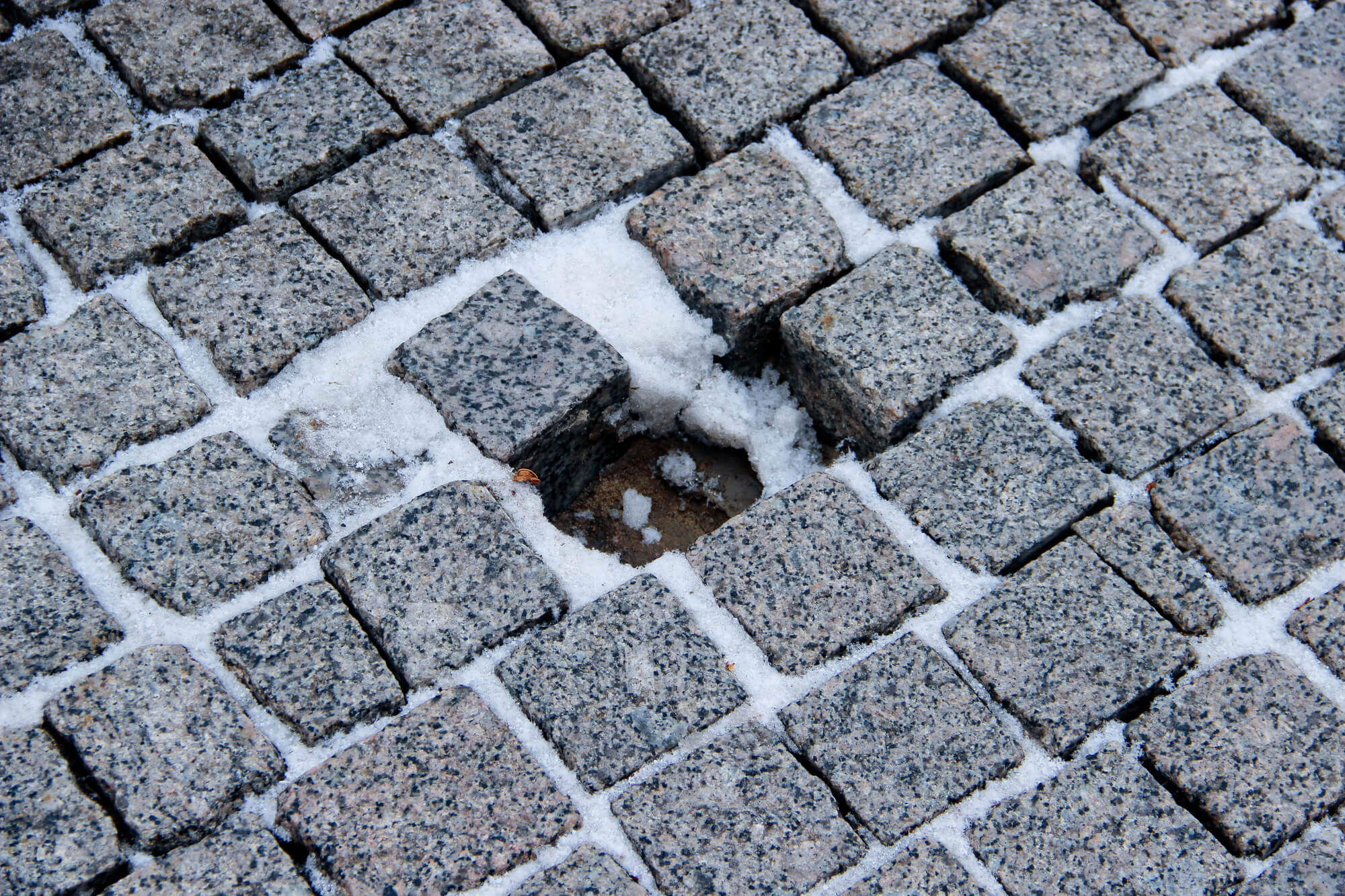
Natural stone pavers offer timeless beauty and unique character. Materials such as granite often perform well in cold climates due to their density and thermal shock resistance.
However, not all natural stone performs equally. Some softer stones can absorb moisture, leading to cracking, scaling, or surface deterioration during freezing and thawing cycles.
Natural stone also tends to carry a higher upfront cost and may require specialized installation techniques.
Clay Brick Pavers
Brick pavers have been used successfully for generations and offer a classic appearance that complements many architectural styles.
While high-quality brick can provide good durability, many of them are more susceptible to moisture absorption and surface wear than modern interlocking concrete pavers engineered specifically for northern climates.
Poured Concrete Slabs
Traditional concrete slabs remain a popular option because of their relatively low initial cost.
However, large monolithic slabs often struggle with Midwest weather conditions. As the ground expands and contracts throughout seasonal freeze-thaw cycles, slabs can develop:
- Cracks
- Surface scaling
- Settlement issues
- Drainage problems
Unlike interlocking pavers, repairs often require replacing large sections of the slab rather than individual components.
For many Upper Midwest homeowners, interlocking concrete pavers provide an ideal balance of durability, design flexibility, maintenance, and long-term value.
Through-Mix vs. Face-Mix Concrete Pavers
One of the most significant differences in the paver industry is the distinction between through-mix and face-mix construction.
Through-Mix Concrete Pavers
Traditional through-mix pavers use the same concrete mixture throughout the entire unit.
The color and aggregate composition remain consistent from top to bottom.
Advantages include:
- Simpler manufacturing process
- Consistent color throughout the unit
- Lower production costs
However, the same mix design that provides structural performance must also serve as the finished surface.
This can limit optimization opportunities.
Face-Mix Concrete Pavers
Face-mix technology uses two separate concrete layers.
The lower layer provides structural strength.
The upper layer is engineered specifically for appearance and durability.
This allows manufacturers to create a much denser, finer, and more refined hardscape surface structure.
Benefits include:
- Improved Surface Density: The face layer contains finer aggregates and optimized cement content, creating a tighter surface.
- Lower Surface Absorption: A denser surface allows less water penetration, also leading to improved mold/moss/algae resistance.
- Better Freeze-Thaw Performance: With less water entering the surface, frost resistance is improved.
- Enhanced Color Vibrancy: Pigments are concentrated in the face layer, producing richer color schemes and opportunities for greater design flexibility.
- Better Color Consistency: Face-mix manufacturing provides more uniform coloration from pallet to pallet.
- Improved Stain Resistance: A tighter surface structure makes it more difficult for contaminants to penetrate.
For northern climates, face-mix technology offers significant performance advantages because the most vulnerable part of the paver, the surface, is specifically engineered for protection against climate challenges.
Why Surface Density Matters More Than Most People Realize
Freeze-thaw deterioration almost always begins at the surface and then:
- Water enters microscopic pores.
- The water freezes.
- Expansion occurs.
- Over thousands of cycles, damage accumulates.
A denser surface dramatically slows this process.
This is one reason premium face-mix concrete pavers frequently outperform traditional through-mix products in demanding climates.
While the homeowner may simply notice that a paver patio “still looks new,” the science behind that performance often comes down to surface density and absorption.
Chemical Exposure: The Hidden Threat
Upper Midwest pavers face more than weather.
They are routinely exposed to:
- Road salts
- Ice melt products
- Fertilizers
- Lawn chemicals
- Acid rain
- Automotive fluids
- Organic staining
These exposures can accelerate deterioration over time.
That is why surface protection technologies have become increasingly important, as they protect the concrete pavers from both water and a variety of stains and chemicals in ways natural stone or poured concrete can’t unless sealed and constantly maintained.
How Chroma Shield+ Helps Protect Pavers
Rochester Concrete Products developed Chroma Shield+ to provide an additional layer of protection against environmental exposure.
Unlike topical sealers that sit on the surface, Chroma Shield+ is integrated into the manufacturing process.
The technology helps create a protective surface that offers improved resistance to:
- Salt exposure
- Chemical attack
- Acid rain
- Staining
- Surface weathering
By reducing the ability of moisture and contaminants to penetrate the surface, Chroma Shield+ helps preserve both appearance and durability over time.
The enhanced protection is particularly crucial for outdoor living spaces like:
- Outdoor kitchens
- Pool decks
- Outdoor fireplaces
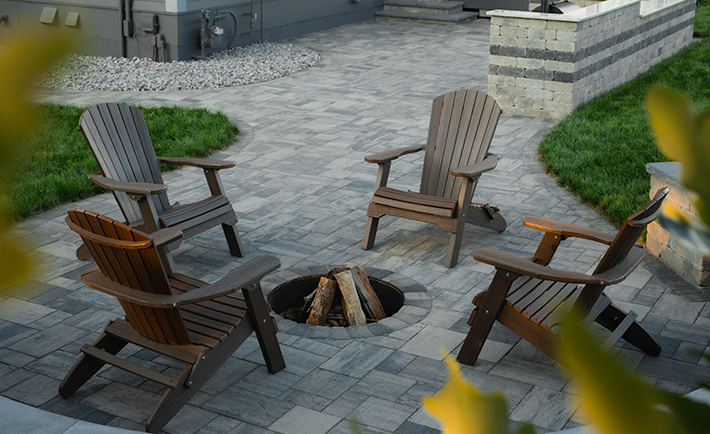
- Paver patios with fire pits or used for grilling
- Driveways
- Landscape pavers
Additionally, for Upper Midwest installations where deicing salts are a fact of life, this added protection can play an important role in maintaining long-term performance.
Color Retention Matters Too
Many homeowners assume fading is unavoidable.
The reality is that manufacturing quality plays a significant role in long-term color performance for hardscape and landscape pavers.
Premium concrete pavers utilize advanced color technologies that provide:
- More vibrant initial colors
- Better consistency from pallet to pallet
- Improved UV resistance
- Better long-term appearance
RCP’s Chroma Color technology was developed specifically to improve color vibrancy and consistency while maintaining the durability required for outdoor living spaces in northern climates.
The result is a paver that not only performs well but continues to look attractive and provides valuable curb appeal, years after installation.
Even the Best Paver Can Fail Without Proper Installation
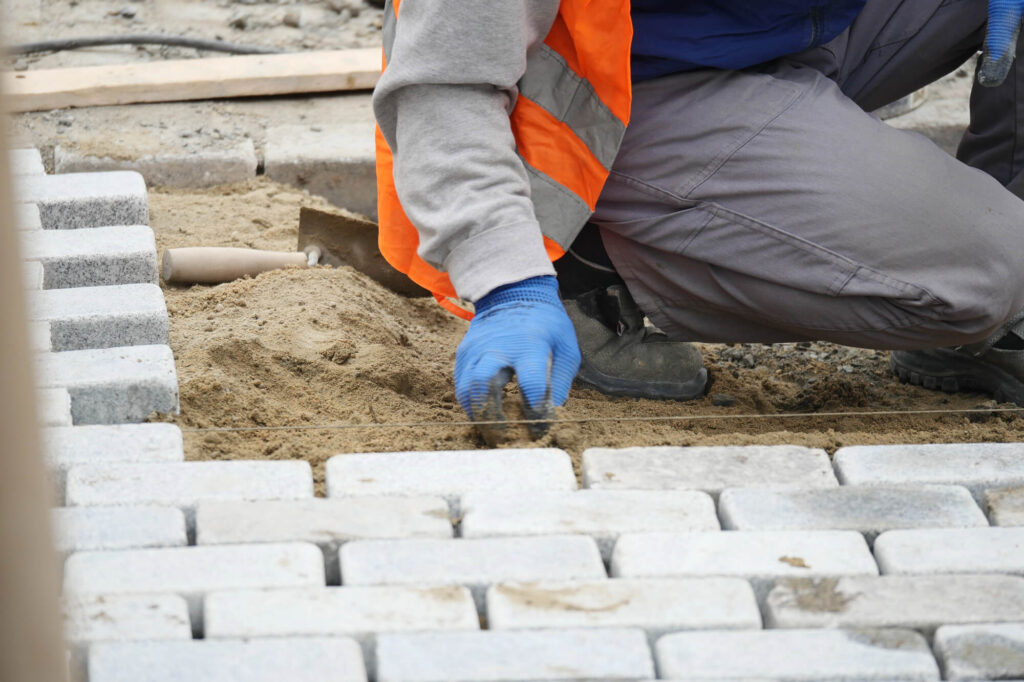
A durable paver is only one part of a successful hardscape project.
In Upper Midwest climates, the installation process plays a critical role in long-term performance. Selecting pavers for the Midwest climate requires durable materials, since local climate conditions and cold weather put real stress on any paved area, whether it’s a paver driveway, patio, or walkway.
Even premium pavers can experience settlement, shifting, drainage problems, or premature wear if the base and sub-grade are not properly prepared. Proper installation quality affects the longevity of pavers more than the pavers themselves, which is why professional installation and getting the process right matters just as much as your paver choice.
Proper Site Preparation Starts Below the Surface
Successful paver installations begin with careful excavation and site preparation.
Key factors include:
- Proper sub-grade preparation
- Adequate excavation depth
- Appropriate base material selection
- Correct gravel base thickness
- Effective compaction procedures
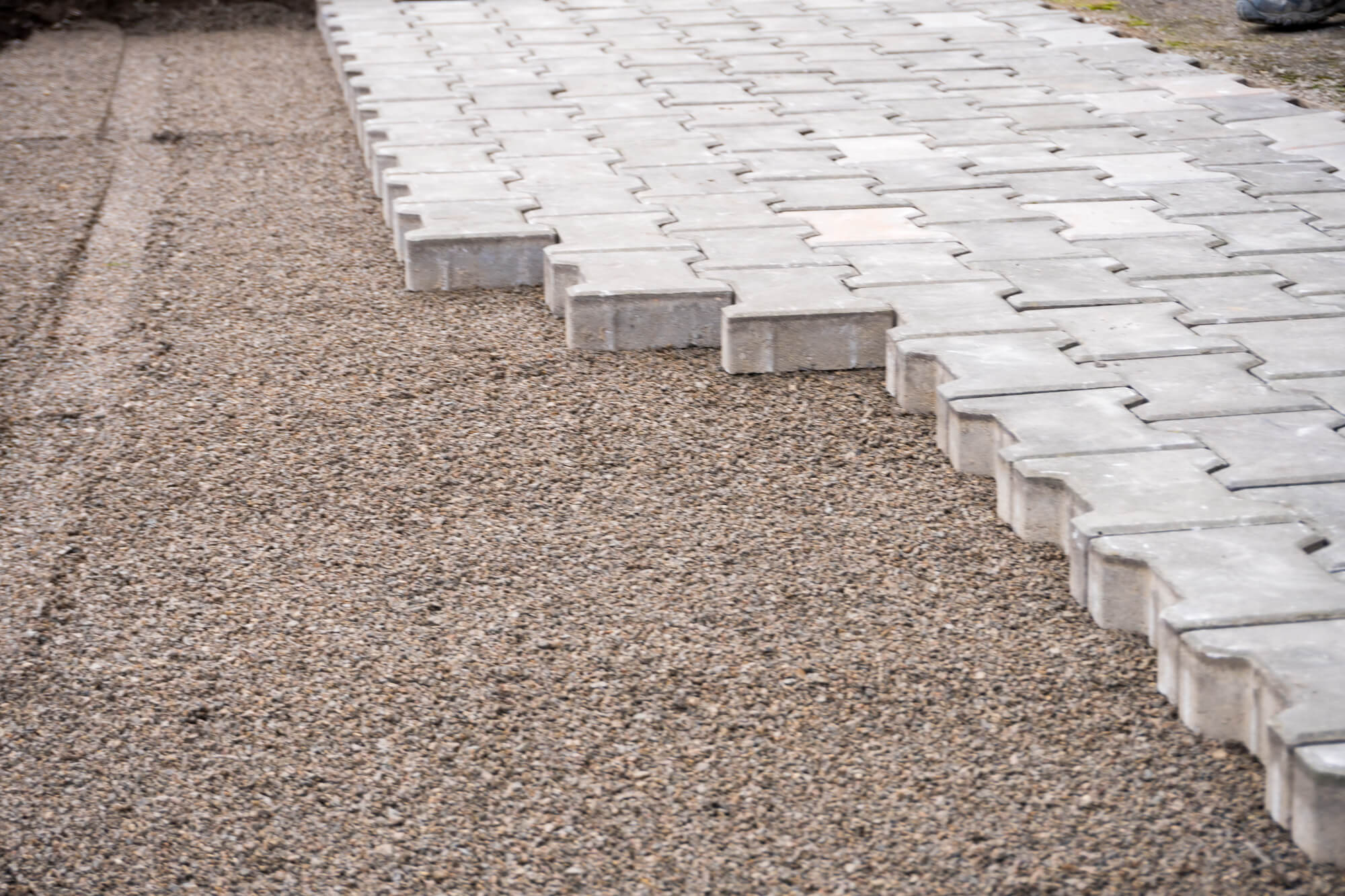
A stable foundation helps distribute loads evenly while reducing movement caused by seasonal freezing and thawing cycles in your outdoor space. A well-compacted, deep gravel base is crucial to prevent frost heave, and installing pavers correctly from the start helps create a stable surface that will hold up under high traffic areas and heavy foot traffic for years to come.
Drainage Is Essential
Water remains the primary threat to long-term hardscape durability.
A properly designed paver system should direct runoff away from the surface and prevent excessive moisture from becoming trapped beneath the installation. Proper drainage prevents standing water and minimizes freeze-thaw damage, and a well-designed base helps separate soil from the paving materials above so water drainage functions the way it’s supposed to.
Good drainage helps reduce:
- Frost heave
- Settlement
- Surface movement
- Freeze-thaw damage
- Efflorescence concerns
Joint Materials Matter
Polymeric sand plays an important role in modern paver systems. Using polymeric sand reduces water infiltration in paver joints, which helps prevent staining and keeps the finished surface looking its best.
When properly installed, polymeric sand helps:
- Stabilize pavers
- Reduce weed growth
- Minimize insect activity
- Improve resistance to washout
- Enhance overall system performance
The Result: Long-Term Performance
When high-quality concrete pavers are paired with proper installation practices, homeowners can enjoy durable paver patios, driveways, walkways, and any other outdoor space that continues performing through decades of Midwest weather conditions. Compared to stamped concrete or other surfaces, well-installed pavers offer unparalleled beauty along with genuine long-term performance, giving homeowners an inviting outdoor space they can enjoy through every season.
Managing Water with Permeable Pavers
While paver strength, density, and water absorption are critical factors, one of the most effective ways to improve long-term hardscape durability is to manage water before it becomes a problem. Materials with low water absorption prevent cracking during freeze-thaw cycles, and choosing water resistant pavers designed to withstand freeze thaw cycles is one of the smartest decisions a homeowner can make in this region.
In the Upper Midwest, moisture is a constant challenge. Rainfall, snow melting, spring runoff, and repeated freeze and thaw cycles all place stress on outdoor surfaces. As explained earlier, when water becomes trapped beneath a patio, driveway, or walkway, it can contribute to frost heaving, settlement, shifting, and premature deterioration.
This is where permeable pavers offer a unique advantage.
Unlike traditional pavers that strive to shed water across the surface, permeable pavers go in the opposite direction as a strategy: they are designed to allow water to move through the joints and into a specially engineered gravel base below. Permeable pavers help prevent ice formation in cold weather, which can also reduce ice buildup and the need for aggressive snow removal methods.
The water is then temporarily stored and gradually infiltrates into the underlying soil.
This approach provides several benefits in Midwest climate conditions:
- Reduces standing water on patios, walkways, and driveways
- Improves drainage during heavy rain events
- Helps manage snow melting and seasonal runoff
- Reduces pressure caused by trapped moisture during freezing and thawing cycles
- Minimizes erosion and washout issues
- Supports sustainable landscape design and stormwater management goals
The Importance of Proper Base Construction
The performance of a permeable paver system depends heavily on proper installation and site preparation.
A successful installation typically includes:
- Careful excavation
- Proper sub-grade preparation
- Open-graded aggregate layers
- Appropriate base material thickness
- Correct compaction procedures
Together, these components create a structural system capable of supporting vehicle and pedestrian traffic while efficiently managing water movement. Patios typically use thinner pavers than driveways, which require thicker options built to bear the weight of vehicles day after day.
A Smart Solution for Challenging Midwest Conditions
For homeowners and contractors seeking additional protection against moisture-related issues, permeable pavers can be a cost-effective solution that combines durability, drainage performance, and attractive design.
Rochester Concrete Products offers several permeable paver options engineered to provide both structural performance and effective stormwater management, such as:
- Holland Eco™ Paver: Designed specifically as a high-flow-rate eco-friendly paver. Holland-Eco is ideal for commercial and heavy vehicular applications.
- Pacific-Eco™: Designed specifically as a high-flow-rate eco-permeable paver. Pacific-Eco is ideal for commercial and heavy vehicular applications.
These systems allow homeowners, contractors, and landscape designers to incorporate drainage solutions directly into patios, walkways, driveways, and pool surrounds while maintaining the aesthetic appeal expected from premium hardscape products, alongside various architectural styles ranging from modern to traditional.
When paired with high-quality concrete pavers and proper installation practices, permeable systems help create outdoor spaces that are better equipped to withstand the demanding weather conditions found throughout Minnesota, Wisconsin, Iowa, Illinois, Nebraska, North Dakota, and South Dakota.
What Contractors Should Ask Before Selecting a Paver
When evaluating products, contractors should request:
- Freeze-Thaw Performance Data: Can the manufacturer provide testing results? Interlocking concrete pavers are designed to flex with frost movement, which is part of why they hold up so much better than rigid materials like ceramic tile or thin sheets of porcelain pavers in harsh climates.
- Water Absorption Results: Lower is generally better.
- Compressive Strength Results: Higher strengths typically indicate a denser, more durable product with high load capacity.
- Manufacturing Method: Is the product through-mix or face-mix?
- Surface Protection Technologies: Does the manufacturer offer advanced technologies such as Chroma Shield+?
- Production Consistency: Can the manufacturer deliver consistent color and dimensions throughout the season?
The Bottom Line
For homeowners and contractors throughout Minnesota, Wisconsin, Iowa, Illinois, Nebraska, North Dakota, and South Dakota, choosing the right paver involves much more than selecting a color or shape.
The harsh realities of Upper Midwest weather demand products engineered for durability. Dense natural stones like granite provide excellent freeze-thaw resistance, and natural stone pavers can withstand heavy foot traffic and harsh weather better than many other materials on the market. Whether homeowners choose granite pavers, clay pavers, or traditional concrete options, the goal is the same: perfect pavers for landscaping projects that need to hold up through snow and ice season after season.
The best-performing pavers typically share several characteristics:
- Dense concrete structures
- Low water absorption rates
- High compressive strengths
- Tight, refined surface layers
- Advanced face-mix manufacturing
- Enhanced resistance to salt and chemicals
- Consistent color technologies
- Proven freeze-thaw performance
While all concrete pavers may look similar on installation day, their long-term performance can vary dramatically.
By understanding the science behind density, absorption, strength, and surface quality, homeowners and contractors can make informed decisions that deliver beauty, curb appeal, and durability for decades to come.
Caring for Pavers Through Winter
Once your pavers are installed correctly, a little care through the winter months goes a long way toward preserving their timeless appeal. Surface texture is crucial for safety around pools or in icy conditions, which is why many homeowners look for slip resistant surfaces when comparing best landscape pavers for their project.
When it’s time to melt snow or clear ice buildup, avoid rock salt and sodium chloride products where possible, and avoid magnesium-based de-icing products on pavers as well, since these can degrade the surface over time. Plastic shovels prevent damage when removing snow from pavers, so reaching for a plastic shovel instead of a metal one during snow removal helps protect the surface finish. For homeowners who want an even lower-maintenance solution, snow melting systems can be installed under pavers to help manage ice and snow automatically.
With proper drainage, quality soil conditions beneath the base, and low maintenance upkeep, pavers continue to offer aesthetic benefits and durability that outperform other surfaces like stamped concrete or hard rock alternatives.
In a climate where winter tests every outdoor surface, selecting a high-quality paver is a long-term performance investment and not simply a design decision.