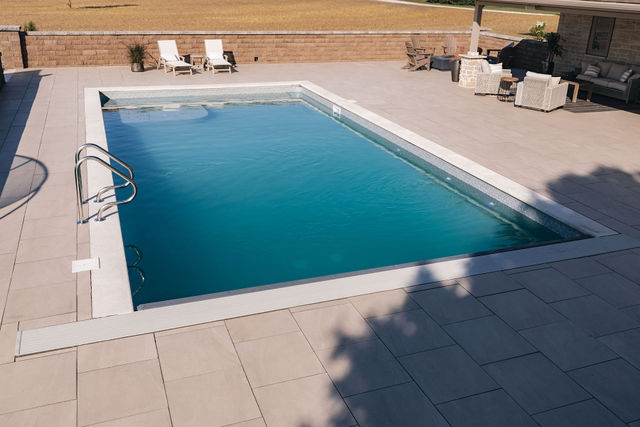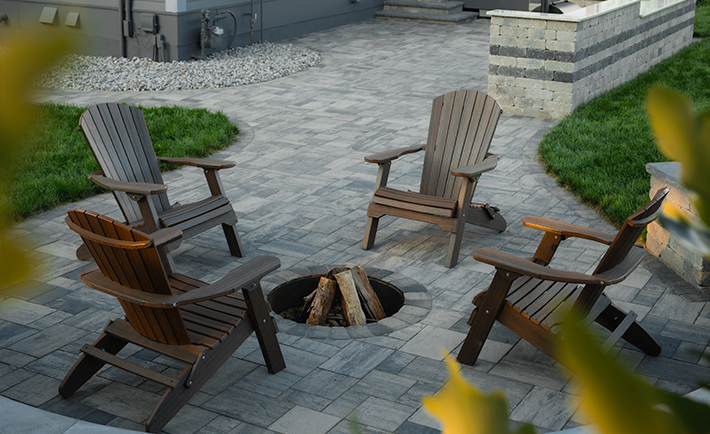
If you build or own pools in a temperate or cold climate, you’ve probably seen the same story: a beautiful new deck that looks heaved, patchy, or slick just a few winters later.
Around the waterline, the stresses stack up fast: standing water, splash-out, refreeze, deicing salts from nearby walks, and constant barefoot traffic.
Homeowners want that band of paving to feel safe and comfortable for decades in their outdoor space, which is why you need systems that behave predictably when freeze-thaw, salt, and pool chemistry all show up at once.
Those goals should take center stage in the choice between porcelain vs. concrete pavers, where the differences go well beyond appearance.
The right choice depends on how each material performs under your project’s specific conditions. And some of the most consequential differences aren’t found in the pavers themselves.
How Porcelain, Concrete, and GeoCeramica Paver Systems Actually Differ
When selecting pavers for an outdoor space, particularly pool decks or commercial spaces, design and durability are critical considerations.
We’re not here to say the aesthetic appeal or design goals for your outdoor space’s surface aren’t important; not at all.
But the first decision, and likely the most important, will be choosing between three different pavement systems: dense porcelain units, interlocking concrete pavers, and porcelain-on-concrete hybrids like GeoCeramica.
Each behaves differently under load, in freeze-thaw conditions, and over years of use.
Those differences become especially important in cold climates, where heaving, cracked corners, and uneven surfaces may originate beneath the paving rather than in the material itself.
Porcelain Pavers at the Pool
Regular porcelain pavers are dense, vitrified (turned into glass) ceramic units, about 20 millimeters thick, with a low water absorption rate and high slip resistance.
They:
- Resist frost, staining, and color fade, ideal for property owners seeking longevity and low maintenance.
- Require precise support consistent with the chosen installation system; improper handling can lead to corner breakage.
- Must be specifically rated for freeze-thaw durability in exterior applications.
Because porcelain pavers are rigid, any weaknesses in the base preparation may result in cracked or rocking pavers, which is why their use for outdoor living spaces or as a commercial paving stone is limited to areas with little to no foot traffic.
Nonetheless, porcelain pavers can be installed using various manufacturer-approved systems, such as bonded, pedestal, and aggregate-based systems, depending on site conditions and expected traffic loads.
Concrete Pavers as a System
Concrete pavers are precast units composed of cement, aggregates, and pigments, designed for strength and durability.
Among the many benefits of concrete paving systems are:
- Engineered design, texture, and color palette diversity, allowing concrete pavers to imitate most types of paver material, including natural stone and clay brick pavers.
- Interlocking design allows for modular patterns, improved load capacity, faster installation time, and easier maintenance or repair to single paver units compared to other pavement systems like poured concrete or natural stone pavers.
- Options for a permeable paving system if installed with proper bedding, units, joints, and edge restraint.
- Depend on proper installation techniques, such as proper compaction, bedding, joint drainage, and weed barriers to prevent issues during freeze-thaw cycles.
Rochester Concrete Products offers interlocking concrete paver collections that include technologies like Chroma Color and Chroma Shield, added during the production process to enhance color consistency and surface protection.
A well-engineered paver system can excel in both residential and commercial design solutions.
What Makes GeoCeramica Different
Rochester Concrete Products’ GeoCeramica system integrates a thin, but dense, porcelain paver tile with a concrete base, designed for segmental paving applications in outdoor spaces:
- Offers a porcelain surface that maintains color stability and slip resistance while resisting stains and chemicals.
- Provides the structural support of a concrete base, allowing for adaptable installation techniques and improved breakage load capacity.
GeoCeramica’s hybrid system leverages paver construction techniques, requiring specialized handling, bedding, and jointing methods.
Choosing between GeoCeramica and concrete pavers often hinges on the balance between familiar concrete performance and the aesthetic and functional benefits a porcelain overlay offers, making it a compelling option for various hardscape features, including a pool deck, patio, outdoor kitchens, garden edging, and even a commercial walkway.
Porcelain vs GeoCeramica vs Concrete Pavers: Quick Comparison
The key differences become clearer when you compare the materials as complete paving systems rather than surface finishes alone.
| Comparison factor | Porcelain pavers | Concrete pavers | GeoCeramica |
| Material construction | Dense, vitrified ceramic | Manufactured concrete | Porcelain face bonded to concrete backing |
| Installation approach | Bonded, pedestal, or other approved systems | Typically segmental over a prepared base | Manufacturer-approved segmental system |
| Freeze-thaw performance | Low-absorption surface; supporting assembly remains critical | Durable when properly manufactured and installed | Low-absorption porcelain face; backing, bond, and base also matter |
| Stain and color resistance | Generally excellent | Varies by product and surface treatment | Porcelain face offers strong resistance |
| Repairability | Depends on installation method | Individual units can generally be lifted and replaced | Individual units can generally be lifted and replaced |
| Primary consideration | Proper support and installation compatibility | Base construction, drainage, and surface upkeep | Product-specific installation and jointing requirements |
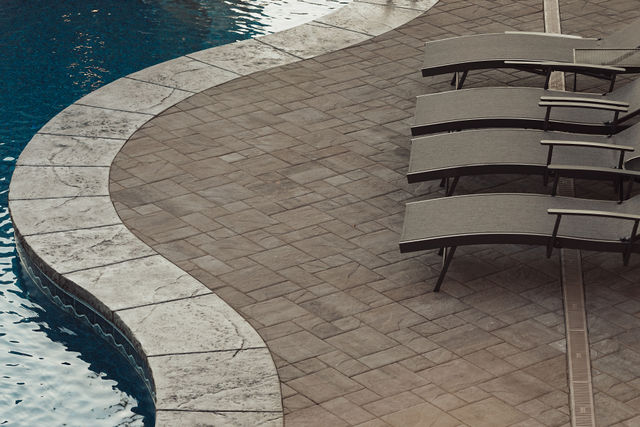
How Freeze-Thaw, Chlorine, and Salt Affect Each Pool Deck Surface
When considering pool deck surfaces for outdoor living spaces, the effects of freeze-thaw cycles, chlorine, and salt are crucial factors for both homeowners and commercial project planners deciding between GeoCeramica, concrete, or porcelain pavers.
Freeze-Thaw Performance
Poured concrete and mortar, common choices for pool decks, patios, and outdoor kitchens, can suffer scaling or cracking when subjected to repeated saturation and freezing. While proper base preparation and effective drainage play a vital role in enhancing their freeze-thaw durability, issues like repairability, maintenance, and aesthetic appeal can limit poured concrete as a choice for many property owners.
Porcelain pavers have a low absorption rate, minimizing water retention on the surface.
However, their performance still heavily relies on the proper installation of joints, bedding, and drainage systems to prevent moisture build-up.
On the other hand:
- Concrete pavers, particularly those meeting recognized standards, provide a reliable freeze-thaw durability option, making them a solid choice for various design goals and high-traffic areas.
- GeoCeramica, which incorporates a porcelain paver face with a frost-resistant concrete backing, offers additional protection and is engineered for demanding climates.
Effects of Deicing Materials
Concrete pavers can experience surface scaling and edge wear if deicing salts or saltwater accumulate and drainage is inadequate. While the dense surface of porcelain pavers is resistant to many chemicals, structural shifts or water retention in the supporting assembly can lead to cracks or debonding. Tools like polymeric sand can help manage joints and drainage effectively, reducing maintenance issues over time.
In projects where slip resistance and permeability are key concerns, especially near pool decks and driveways, selecting an interlocking design or permeable paving system can enhance safety and longevity.
The performance of the porcelain-to-concrete bond under freeze-thaw and salt conditions is an essential factor when decision time comes, particularly if you’re coordinating with commercial design solutions or working in variable climates.
H2: Slip Resistance and Surface Heat Where Bare Feet Live
Around a pool, comfort and safety hinge on two things every bare foot notices: how slippery the surface is when wet and how hot it gets in full sun. Those traits are driven by finish, color, material properties, exposure, and maintenance, not simply whether the product is labeled porcelain, concrete, or hybrid.
Exterior porcelain pavers intended for poolside applications may have structured, matte, or grip finishes and published slip-resistance test results.
Concrete pavers can provide good surface texture, but wear, contaminants, or certain film-forming sealers can change wet traction.
GeoCeramica carries the slip characteristics of its specific porcelain face, but lives on a paver-style base and joint system, so joint materials and upkeep matter as much as the tile texture.
What actually controls slip under bare feet
Traction around pools has more to do with the following details than with the label on the box:
- Surface finish (structured or matte vs. polished or very smooth)
- Sealers and coatings, especially glossy film-formers
- Contaminants such as algae, sunscreen, and fine dust
- Slopes, grade, drainage, and where water regularly ponds
For mixed-age households, aging users, or guests with mobility challenges, treat slip resistance, edge contrast, and slope like accessibility choices for an ADA-compliant pavement system, not just code checkboxes.
Plan to clean and maintain the surface according to the manufacturer’s recommendations so the deck retains its intended traction characteristics.
For commercial pool decks, verify the applicable slip-resistance criteria and test documentation rather than relying on general claims that a surface is “non-slip.”
What actually controls surface temperature
Surface heat is strongly influenced by color and sun exposure, although material properties and surface finish also matter:
- Color: Lighter tones often absorb less solar energy than darker ones
- Exposure and layout: All-day sun on main walking paths versus shaded or offset areas
- Shade and cooling: Pergolas, umbrellas, planting, and other shading features
If hot decks are a concern, combine lighter colors with shading and evaluate actual product samples under representative conditions.
You can still use bolder tones in borders and accents without placing the darkest surfaces along the busiest barefoot routes.
Designing the Pool Deck as a Complete System, Not Just a Surface
Long before you choose a surface, you also choose a structure. Pool decks last when the base, joint openings, drainage, and pool-shell interface are designed as one system. This is particularly important in freeze-thaw climates, where frost-susceptible soils and poorly drained bases can cause settlement, heaving, and damage around the pool edge.
Neither rigid nor flexible assemblies perform reliably when water becomes trapped or drainage is inadequate. Once you treat the pool deck as a risk zone instead of “just another patio,” paver product selection becomes part of an intentional freeze-thaw strategy.
Rigid porcelain-on-slab assemblies
Rigid porcelain-on-slab systems move as a more unified assembly and depend on a sound concrete structure, suitable bonding materials, and properly designed movement joint openings.
When setting porcelain over concrete, the critical details are:
- How the slab accommodates movement
- How the tile is bonded
- How moisture is managed
Exterior-rated installation materials and properly located movement joints are essential to the approved system.
Skipping those details is one reason otherwise excellent porcelain on decks, patios, or walkways can crack or debond after severe winters.
Partnering with tile-experienced installation labor familiar with exterior movement-joint design is usually the best fit for this approach.
Segmental and hybrid assemblies
Flexible segmental systems, such as concrete pavers and GeoCeramica, can accommodate limited movement and allow individual units to be lifted and re-leveled when necessary.
Their performance depends on a properly designed granular base, consistent bedding, effective edge restraints, and joints suited to the selected product.
GeoCeramica requires particular attention to its installation instructions.
Notably, GeoCeramica requires a roller compactor rather than a vibrating plate compactor, which can damage the porcelain surface. Crews should follow those product-specific details rather than treating GeoCeramica exactly like a conventional concrete paver.
Because GeoCeramica shares a segmental paving format, designers can often consider porcelain-faced fields alongside standard concrete pavers for borders, layering patterns, or transitions. Compatible thicknesses, bedding requirements, and edge details must be checked before assuming both products can use an identical base design.
See the Rochester Concrete Products GeoCeramica Installation Manual for product spec sheets and installation guidance.
How Each Pool Deck Material Ages Over 10–30 Years
Over 10–30 years, porcelain, concrete, and GeoCeramica do not age the same way, even when they start on equally good bases.
Thinking in decades is where the right spec helps prevent callbacks, uneven aging, and expensive mid-life repairs.
Porcelain Pavers: Color Stability and Low Cosmetic Maintenance
Porcelain usually asks the least of you cosmetically: sweeping, washing, and joint and drainage checks. It resists many stains, poolside chemicals, and UV-related color change extremely well, so much of the change you see may come from joints, surrounding landscaping, or movement in the structure below. Grouts and joint materials are still maintenance items and may need periodic attention.
Concrete Pavers: Surface Aging and Routine Upkeep
Concrete pavers can last just as long under suitable conditions, but they may show their age more visibly. Efflorescence, some color softening, and surface wear can occur; polymeric jointing sand might need periodic reapplying or attention for weeds and ants. Sealing can help with staining and color richness where recommended, but it adds its own maintenance cycle and slip considerations.
Rochester Concrete Products’ Chroma Color and Chroma Shield technologies are worth considering when evaluating applicable concrete paver options, particularly where long-term color appearance and resistance to environmental exposure matter.
GeoCeramica Pavers: Porcelain Appearance with Segmental Repairability
GeoCeramica combines the long-term appearance advantages of its porcelain face with the joint maintenance and potential repairability of a segmental pavement. Its surface helps resist staining and color change, while the concrete base, joints, and drainage remain important to long-term performance.
If you care as much about how the deck looks and works in year 15 as in year 1, include future repairs in your thinking, not just the first season’s photos.
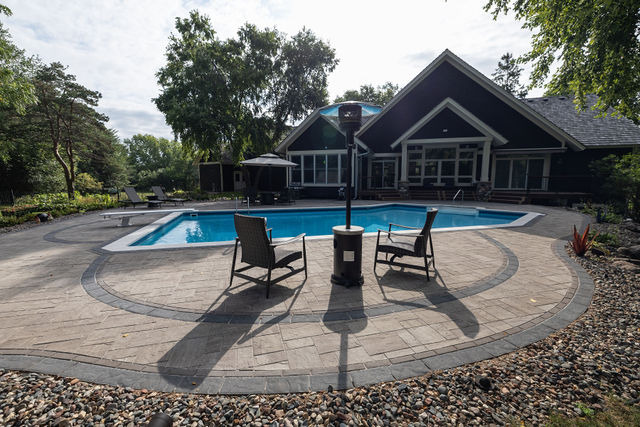
Which Paver System Fits Common Pool Deck Scenarios?
Most projects fall into a few predictable patterns, and matching those to the right system makes your choice much easier.
Start by being honest about soil conditions, utility congestion, crew skills, and how much seasonal maintenance you actually want.
- Budget-conscious residential pools: For straightforward backyards with suitable soils and no unusual utility constraints, a well-built concrete paver system is often the practical choice. It’s familiar to crews, repairable, and generally budget-friendly.
- High-end pools with an existing or planned concrete slab: Where the project already calls for a properly designed slab and tile-experienced installers are available, exterior-rated porcelain paver tiles can deliver a sleek, low-maintenance surface.
- Cold-climate pools seeking porcelain aesthetics: Where you want porcelain’s stain resistance and color stability but prefer an approved segmental installation, GeoCeramica can offer a useful balance of surface performance and future repairability.
- Pool decks with buried utilities or likely future access needs: On tighter sites with numerous underground lines, concrete pavers or GeoCeramica can simplify future access and repairs because individual units can often be lifted and re-laid without demolishing an entire paved area.
For Rochester Concrete Products projects, the concrete paver, slab, and tile collection provides conventional paving options, while GeoCeramica offers a porcelain-faced alternative. Confirm the selected product’s suitability for the intended poolside application before finalizing the design.
Commercial Paver Selection for Shared and Public Pool Decks
Commercial paver selection follows the same basic principles as residential pool-deck design, but the consequences of a poor specification can be greater. Hotels, resorts, multifamily properties, and community pools may see heavier foot traffic, frequent cleaning, and greater demands on accessibility and maintenance.
For these projects, the selection process should account for:
- Traffic and loading: Pedestrian volumes, furniture, maintenance equipment, and any anticipated concentrated loads
- Wet-surface performance: Product-specific slip-resistance documentation and applicable safety requirements
- Accessibility: Stable, firm, slip-resistant walking surfaces, transitions, and slopes that meet applicable standards
- Maintenance and repair: Cleaning procedures, joint upkeep, and the ability to replace damaged units
- Installation compatibility: Base design, drainage, edge restraints, and the manufacturer’s approved applications
Concrete pavers can be attractive where repairability, established installation methods, and design flexibility are priorities.
GeoCeramica offers another option where a porcelain surface and segmental installation are both desirable.
For commercial applications, verify the specific product’s intended use, load suitability, installation requirements, and available test data. A product appropriate for a residential pool deck should not automatically be assumed suitable for every commercial setting.
Budget, Risk, and Total Cost of Ownership Over the Long Term
Upfront, concrete pavers are often the most budget-friendly choice, especially on straightforward sites with good soils, while porcelain-on-slab installations may carry higher material and labor costs.
GeoCeramica introduces its own material and installation costs, which can fall between or overlap with those alternatives depending on the project.
Regardless of the paver system, over 10–30 years, maintenance and risk matter more than the day-one invoice, especially in freeze-thaw markets.
Three drivers shape total cost of ownership:
- Maintenance load: How often joints, sealers, and cleaning need attention
- Repair effort: How disruptive it is to correct movement or reach buried utilities
- Risk profile: The likelihood of slip issues, scaling, or movement that forces partial replacement
The least expensive material is not always the least expensive installed system, and the lowest-maintenance surface does not necessarily produce the lowest lifetime cost.
Compare the full assembly, expected maintenance, accessibility for repairs, and consequences of failure, not just the unit price of the paving.
Which Pool Deck Paver Should You Spec? Rochester Concrete Products Can Help
The right choice between traditional porcelain tiles, concrete pavers, and GeoCeramica comes down to more than appearance or material cost.
The best pool deck specification is the one that matches the surface to the site’s soils, drainage, pool structure, expected traffic, and long-term maintenance needs. No single material wins every comparison, but understanding how each system performs makes the decision easier to defend.
That’s where Rochester Concrete Products brings something useful to the conversation.
Alongside its established concrete paver collections, RCP offers GeoCeramica, pairing a porcelain surface with a concrete paver base for approved segmental installations.
Combined with product-specific installation guidance, technical resources, and professional support, those options give contractors, designers, and property owners a practical way to balance poolside appearance, durability, installation requirements, and future repairability.
Ready to narrow down your pool deck specification? Explore Rochester Concrete Products’ pavers and GeoCeramica collection, browse our technical and installation resources, or contact the RCP team for help choosing the right products for your project.