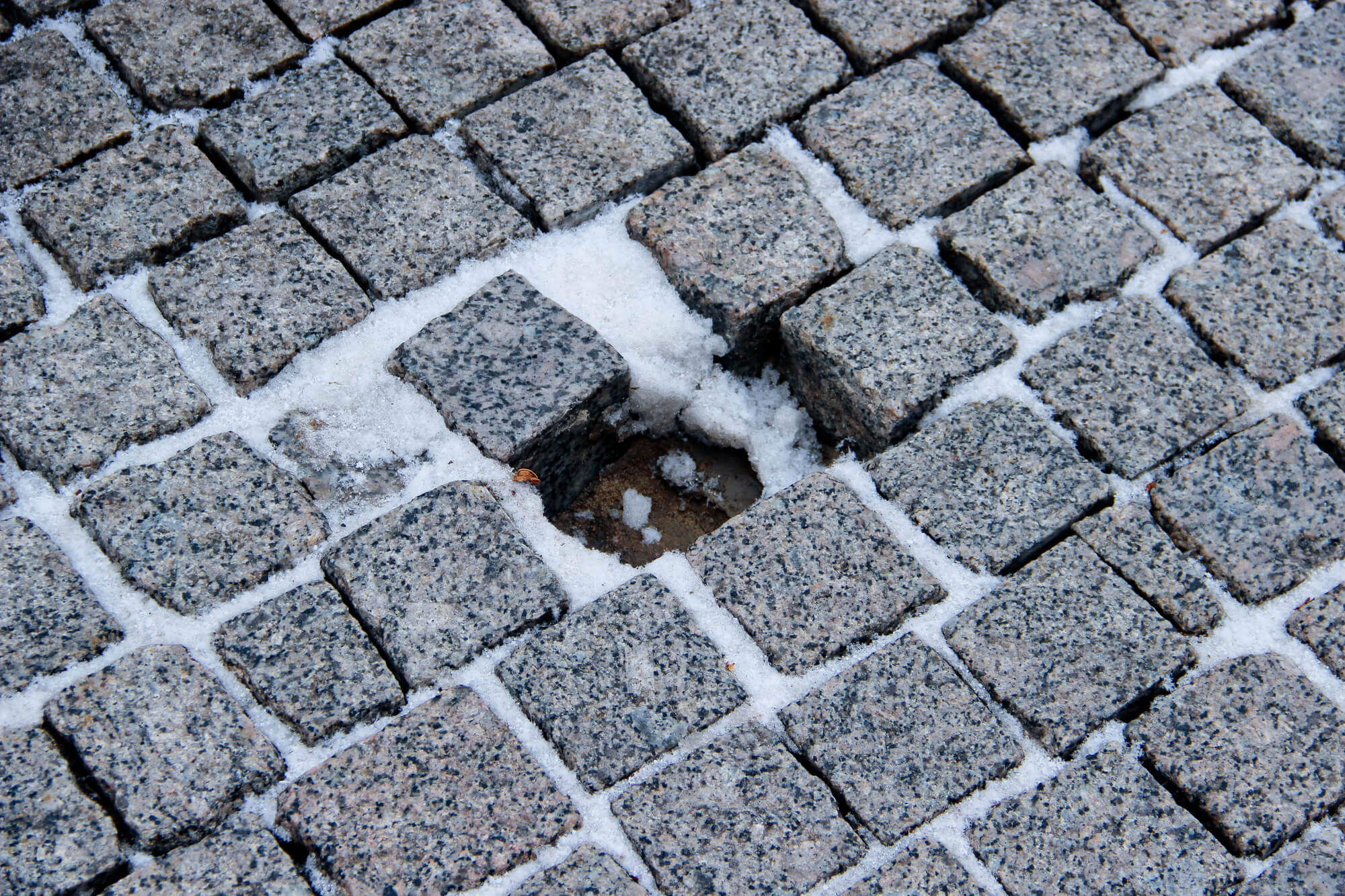
You have probably seen this before. A paver patio or driveway looks perfect the first summer, then after a couple of hard winters, the paver bricks rock underfoot, there’s water pooling in low spots, and the border starts to wander.
Most people blame the pavers, but in the Upper Midwest, the real story often starts deeper, at the soil and base beneath it.
The right paver base depth depends first on how the surface will be used. Rochester Concrete Products recommends 4 to 6 inches of compacted gravel base for pedestrian applications and 8 to 12 inches for light vehicular applications. Soil, drainage, site conditions, and expected loads can require more preparation.
Those conditions matter because frost can reach roughly 42 to 60 inches into the ground across parts of the Upper Midwest. Good paver base prep in a cold climate is not about matching frost depth with base thickness. It is about building a well-drained, properly compacted system that helps reduce frost heave and seasonal movement.
By the time you are done here, you will understand what frost depth actually is, how it affects paver base preparation in a cold climate, what Rochester Concrete Products recommends for pedestrian and light vehicular applications, and how to check a plan or bid before you dig.
How Proper Paver Base Prep Helps Reduce Frost Heave
In the Upper Midwest, paver installations, whether for walkways, driveways, or patios, can develop problems when the base and subgrade are not prepared for deep frost and wet, moving soils. A thin or inconsistent paver base placed over topsoil or soft clay gives freeze-thaw cycles more opportunity to cause uneven movement, frost heave and freeze-thaw damage over time.
When paving stones, whether concrete pavers or porcelain pavers, remain intact but the finished surface begins moving, the structure underneath is one of the first places to investigate.
Many problem projects in this region share a similar pattern: the concrete pavers still look fine, but the base or subgrade was not properly matched to local soil conditions and climate.
Issues such as too little gravel bedding, uneven excavation, poor water drainage, or unsuitable soil left in place can all contribute to movement.
Typical warning signs include:
- Rocking or tipping pavers or slabs along edges and borders
- Bird baths and pools that appear after the spring thaw
- Borders or soldier courses that lean outward over time
Those symptoms can indicate problems within the paver base system: base layer, drainage, bedding sand, edge restraint, or compaction.
Fine, wet clays and silts deserve extra attention because they can expand as they freeze and soften when they thaw. Even if the supporting aggregate base is properly compacted with tools like a plate compactor, but is shallow, poorly drained, or placed over unsuitable subsoil, frost heave can reach the finished paver surface and shorten the life of the project. The pavers themselves matter, too. In cold climates, choosing freeze-thaw rated pavers helps ensure the surface is suited for repeated winter exposure.
A key step to preventing that movement is to select the right base materials, such as crushed stone or crushed gravel, to ensure a compacted, sturdy foundation that reduces the environmental impact of extreme cold on your paving stones and supports long-lasting installations.
Proper drainage facilitated by techniques like grading and using geotextile fabric can also help maintain stability during freeze-thaw cycles and prevent the formation of cracks.
How Deep Does the Ground Really Freeze in MN, WI, IA, ND, and SD?
Frost depth is a planning reference used to estimate how deeply freezing conditions can affect the ground. You may also hear this depth described as the frost line. As soil freezes, the combination of frost-susceptible soil and available moisture can contribute to seasonal ground movement.
Across Minnesota, Wisconsin, Iowa, North Dakota, and South Dakota, commonly referenced frost-protection depths fall roughly within the 42- to 60-inch range, although requirements and conditions vary by jurisdiction.
Typical planning-level frost depths look roughly like this:
| State | Common frost-protection depth for planning* |
| Minnesota | 42 to 60 inches, depending on jurisdiction |
| Wisconsin | Around 48 inches |
| Iowa | Around 42 inches |
| North Dakota | Around 54 inches |
| South Dakota | Roughly 42 to 48 inches, depending on locality |
*These figures are general climate and frost-protection references, not prescribed paver base depths. Always confirm applicable requirements with your local building authority.
Those numbers are not your paver base thickness. They are a climate flag. Deeper frost can increase the potential for movement when fine, wet, frost-susceptible soils are present beneath the pavement.
Two yards in the same town can behave very differently if one is on clean sand and the other is on heavy clay soil. That is why local frost depth should be considered alongside soil conditions, drainage, and the intended use of the paved surface.
Additional Disclaimer: This is planning-level information, not a stamped engineering design. Always follow applicable local codes, project specifications, and Rochester Concrete Products installation guidance.
How Frost Depth Affects Paver Base Preparation
You do not match frost depth inch for inch with paver base thickness. Instead, it depends on several factors, including climate, soil conditions, drainage, and the intended use of the paved surface.
Factors to Consider:
- Climate: Areas with deeper frost may require more extensive preparation, especially if using materials like concrete pavers or porcelain pavers.
- Soil Conditions: Granular, free-draining soils like sand and gravel are ideal for paver base installation. In contrast, fine, wet, frost-susceptible clays and silts may demand additional measures.
- Use and Load: The purpose of the paved area affects the preparation. Residential driveways may require a thicker aggregate layer compared to walkways. The use of a geotextile can prevent intermixing of subsoil and aggregate base, providing added support and preventing any water runoff issues.
A well-compacted foundation using crushed stone or gravel as a base layer is also crucial.
In well-drained areas with stable, undisturbed soil, a project may use the lower end of the recommended base range, in contrast to a project with poor drainage, disturbed soil, or saturated conditions that will require the upper end of the range or a different pavement design.
If you size the base for traffic (driveways or walkways) but ignore a weak clay subgrade or persistent water, you can still invite movement or settlement in your paving system.
How Deep Should a Paver Base Be in Minnesota and Other Cold Climates?
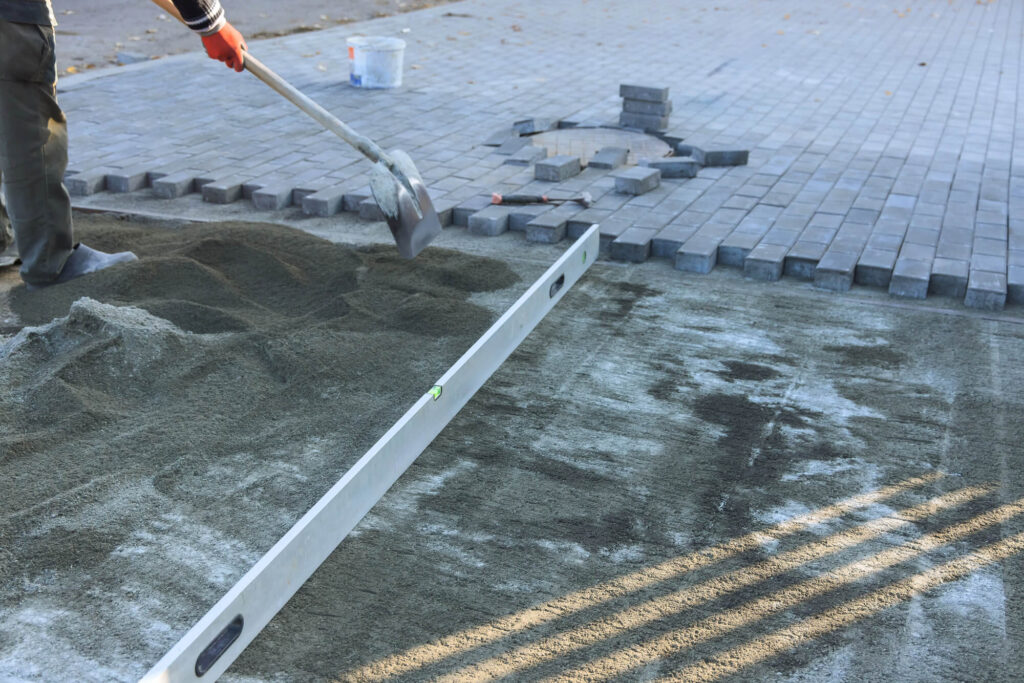
There is no single depth that works for every paver project. Choosing the right depth starts with the intended use, then adjust for drainage, soil conditions, and site disturbance.
Rochester Concrete Products’ Product Guide calls for:
- Pedestrian traffic: 4 to 6 inches of compacted gravel base
- Light vehicular traffic: 8 to 12 inches of compacted gravel base
Use the minimum recommended depths in well-drained areas or over undisturbed soil. Use the maximum depths in poorly drained areas or where the soil has been disturbed.
Where soil is saturated more than 50% of the time, Rochester Concrete Products recommends using filter fabric and additional aggregate.
That distinction matters in Minnesota and other cold climates.
Base depth is only one part of reducing the risk of frost-related movement. The condition of the subgrade, how readily water can leave the pavement section, the aggregate used, and how thoroughly each lift is compacted all affect how the finished surface performs through repeated winters.
For patios or outdoor living spaces carrying concentrated loads, or projects exposed to unusual vehicle loads, site conditions should be evaluated separately rather than assuming a standard pedestrian detail applies.
If you are comparing bids and see one contractor proposing a 4-inch base under an interlocking concrete pavers driveway while others are at 8 to 10 inches, that is a red flag in this region. Asking, “What soil, drainage, and traffic conditions are you designing that base for?” is a fair, smart question.
Think About Future Loads Before You Set the Depth
Base preparation should account for what the space may carry later, not just how you plan to use it today. A pedestrian patio can become a much more demanding structural area if concentrated loads are added later.
Before finalizing the base detail, consider whether the project may eventually support:
- An outdoor kitchen or masonry grill
- A hot tub or plunge pool
- Large built-in planters
- Substantial fire features
- Occasional vehicle access or parking
Those conditions may justify a different base design in the affected area. It is usually easier to strengthen the pavement section during initial construction than to remove finished pavers and rebuild the aggregate after the outdoor space changes.
If future loads are uncertain, discuss them with the installer or designer before excavation begins so the base can be matched to the actual long-term use of the space.
How Soil and Drainage Change the Base You Need
On wet, fine soils in the Upper Midwest, base depth, separation, and drainage all need attention. Clay soil can retain moisture, and a site that traps water may become even more vulnerable when snow melts and the ground is already saturated. A good drainage system manages both surface water and water within the pavement section rather than relying on extra base depth to solve the problem.
On clean sands and gravels, site conditions may allow the lower end of the recommended depth range because the native soil drains more readily.
Either way, what you build on matters as much as how many inches of stone you place.
For example, many sites sit on glacial tills, loess, or clay fills that hold water and can be frost susceptible. Others have native sands and gravel that drain quickly.
On fine, wet soils, you have three reliable tools:
- Strip sod, topsoil, and soft spots until you hit firm subgrade.
- Use appropriate separation fabric where site conditions call for it to help keep subgrade fines from migrating into the aggregate layer.
- Increase the base or incorporate an appropriate drainage strategy when site conditions require it.
These steps help keep water and unsuitable material out of the structural layers, giving freeze-thaw cycles less opportunity to disrupt the surface. A properly drained and separated base over difficult soil can perform better than simply adding more aggregate without correcting the underlying problem.
The goal is not necessarily maximum drainage in every installation. It is the right drainage strategy for the system. A permeable paver system, for example, may use a different aggregate section than a conventional interlocking pavement.
If you are working with a designer or installer, it is worth asking how they are adjusting the base structure for your soil and drainage, not just your paver pattern.
Rochester Concrete Products takes the same application-first approach in its installation guidance: base depth is tied to intended use, while drainage and subgrade conditions determine when additional preparation, separation fabric, or base material may be needed.
A Few Site Clues Can Tell You a Lot
You do not need a laboratory soil classification to notice whether a site deserves closer attention. Before the design is finalized, look at a few simple conditions:
- Dig below the topsoil and see whether the native soil is sandy and granular or sticky and fine-grained.
- Watch how quickly water disappears after a heavy rain.
- Look at nearby patios, sidewalks, and driveways for recurring winter movement or spring settlement.
These observations do not replace professional evaluation, but they can reveal whether drainage and frost-susceptible soils need more attention before construction begins.
Two properties on the same street can require different preparation because the material beneath them may be completely different.
Why Aggregate Choice Matters as Much as Thickness
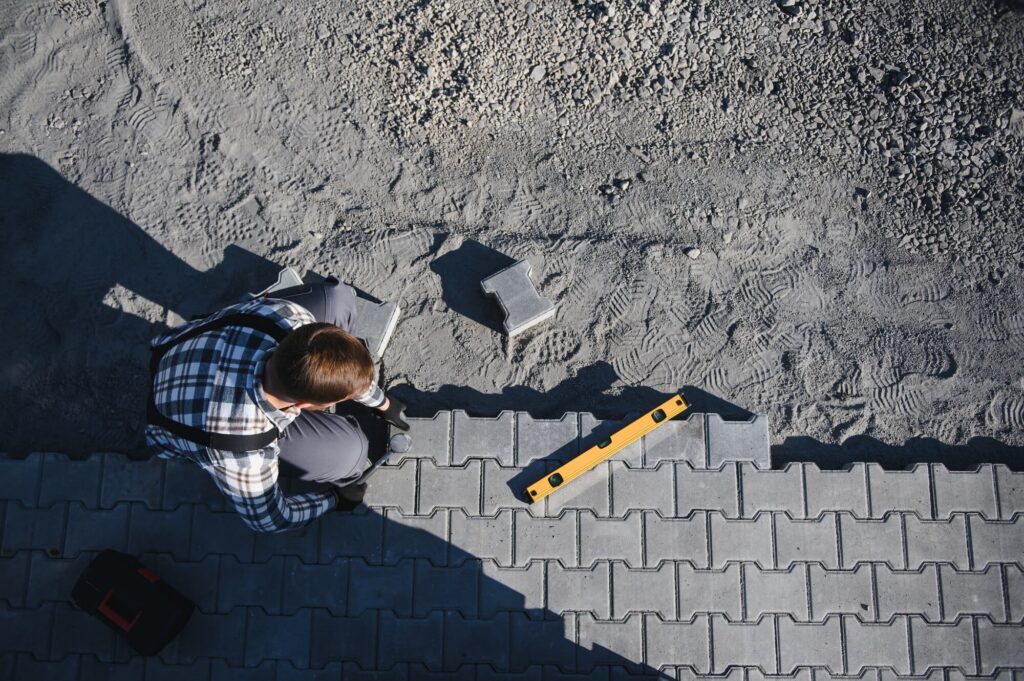
Your base aggregate should meet the requirements for the pavement system rather than simply being whichever material is readily available.
A segmental paver system is not the same as a concrete slab. The base, bedding, drainage, and edge restraint work together.
A dense-graded base may use compacted crushed stone, while a permeable paver system may require a different aggregate and drainage detail. Avoid substituting stone dust, concrete sand, or other materials unless they meet the applicable installation specification.
In simple terms:
- Dense-grading base: a mix of aggregate sizes and fines designed to compact into a stable structural layer
- Open-grading base: clean aggregate with fewer fines that allows water to move through the pavement structure more readily
- Alternative pavement sections: systems that combine different aggregate layers or drainage approaches for specific site conditions
Aggregate gradation, compaction, confinement, and drainage all matter. A material that holds excessive moisture or does not compact properly can undermine an otherwise adequate base depth.
Any alternative or open-graded section should follow the applicable pavement design and product guidance for geotextiles, edge restraints, drainage outlets, and transitions rather than being improvised in the field.
For Rochester Concrete Products paver systems, start with the applicable RCP installation and technical resources, then adjust the pavement section to the project requirements at the site.
The Construction Techniques That Help a Paver Base Handle Freeze-Thaw
Even a correctly sized base can develop problems if it is built over mud, frozen ground, organic material, or inadequately prepared soil. In this climate, good construction means getting the subgrade firm and properly graded, placing aggregate in manageable lifts, and compacting those lifts with suitable equipment.
Four Field-Proven Steps for a Stable Paver Base
Step 1: Excavate and Strip Properly
Remove sod, topsoil, and soft pockets. Cut to a consistent depth across the entire area rather than leaving a mix of holes and high spots that become difficult to correct later.
Step 2: Prepare and Compact the Subgrade
Shape the subgrade to the proper slope for the project’s drainage plan, then compact the exposed soil as required. The base should begin over a properly prepared subgrade, not mud, organic material, or frozen ground. Correct soft or unstable areas before placing the aggregate layer.
On larger projects, contractors may also proof-roll the prepared subgrade with suitable equipment to identify weak areas that rut, deflect, or pump under load. Those areas should be corrected before the base aggregate is placed. The goal is simple: find unstable soil while it is still exposed rather than after the finished pavement is installed.
Step 3: Place the Base in Lifts and Compact Each Lift
Place aggregate in manageable lifts and compact each lift with equipment appropriate for the material and project before adding the next. The goal is consistent compaction throughout the base rather than a thick layer that is only firm near the surface. Proper compaction should extend through the full base rather than leaving a thick layer that is firm only near the surface.
Step 4: Add Bedding, Pavers, and Edge Restraints
Once the base is compacted and properly graded, install the bedding layer, pavers, and appropriate, solid edge restraints according to the pavement system and product installation guidance. Properly installed edge restraints help maintain the integrity of the finished pavement under traffic and seasonal movement.
Simple jobsite checks, such as excavation-depth measurements and documented compaction procedures, help make sure the base that was designed is the base that was actually built.
Do Not Ignore Construction Conditions
Good cold weather performance starts on installation day. Base material should not be placed over frozen, muddy, or heavily saturated subgrade simply to keep a project moving.
Frozen soil can appear firm during construction and then lose support when it thaws. Saturated soil can behave the same way under compaction and traffic.
If conditions are poor, correcting drainage, stabilizing soft areas, or delaying that phase of construction is better than burying a weak subgrade beneath an otherwise well-built paver system.
Input Framework for Long-Term Paver Performance
Building codes often address frost protection for structural foundations, but those requirements should not be mistaken for paver sub base specifications. Segmental pavement design instead considers the intended use of the surface together with subgrade, drainage, aggregate, and climate.
A good base decision comes down to three things: frost conditions, the soil under the project, and how the surface will be used.*
- Deeper frost, wet clay, and vehicle traffic on a driveway: lean toward the upper end of the recommended base range and look closely at drainage, separation fabric, and subgrade stability.
- Mixed soils and pedestrian patio pavers: start with the pedestrian base recommendation, then adjust for drainage and any soft or disturbed areas.
- Well-drained granular soil and foot traffic: the lower end of the pedestrian base range may be appropriate when the subgrade is stable, and water can move away from the pavement.
The point is not to turn frost depth into a formula. Start with the use, then look at the soil and drainage. Those conditions will tell you much more about the base you need than frost depth alone.
*Treat this as guidance for asking better project questions. For engineered, commercial, or otherwise critical applications, coordinate with applicable project specifications, local requirements, geotechnical information, and manufacturer guidance.
What This Means for Your Next Paver Project
If you are staring at a plan or bid and wondering whether the paver base is deep enough for Minnesota winters or another Upper Midwest freeze-thaw climate, start with the application rather than frost depth alone. That holds true whether you are laying pavers for a walkway or planning a brick patio installation.
Rochester Concrete Products recommends 4 to 6 inches of compacted gravel base for pedestrian traffic and 8 to 12 inches for light vehicular traffic, with depth and base preparation adjusted for drainage and soil conditions. That gives you a starting point. The rest of the system, subgrade preparation, aggregate, drainage, compaction, bedding, and edge restraint such as paver edging, is what helps that base perform as intended. The same principles apply to brick paver installation.
When you are ready to turn those numbers into a real project, work with a qualified dealer, designer, or installer familiar with Rochester Concrete Products systems. They can help confirm that the base detail fits your soil, drainage, climate, and intended use before you lay patio or driveway pavers.