Winter can be hard on any outdoor surface. Snow, ice, freezing temperatures, and repeated freeze-thaw cycles expose patios, walkways, and driveways to conditions they don’t experience during warmer months. Add deicing salts to the mix, and homeowners often wonder whether the constant ice melt will damage their concrete pavers.
Deicing salt does not automatically ruin concrete pavers. However, repeated or excessive exposure to deicing products, especially when combined with moisture, saturation, and freeze-thaw cycles, can contribute to surface deterioration and other winter maintenance problems.
You may also notice a white haze or powder on your pavers during or after winter. That isn’t necessarily deicing salt damage, but efflorescence, a generally temporary cosmetic condition caused when moisture carries naturally occurring water-soluble salts to the surface.
Understanding the difference and using the right winter maintenance practices can help protect your paver patio, walkway, or driveway through many cold-weather seasons.
How Deicing Salt Can Affect Concrete Pavers
Whenever the topic of how deicing salt damages pavers comes up, most people assume the sole culprit is rock salt or similar products. However, the concern isn’t simply that salt or deicing chemicals come into contact with the pavers. Moisture plays an important role.
How Deicing Products Work
Deicing products work by lowering the freezing point of water, helping melt snow and ice, or preventing ice from bonding as strongly to a paved surface.
That can improve winter safety, but repeated deicer exposure can also create challenging conditions for concrete.
As snow and ice melt, water can move across the surface and into joints and other parts of an interlocking concrete pavement system. When temperatures drop again, that moisture can freeze. Repeated cycles of melting, saturation, and freezing can place additional stress on concrete surfaces.
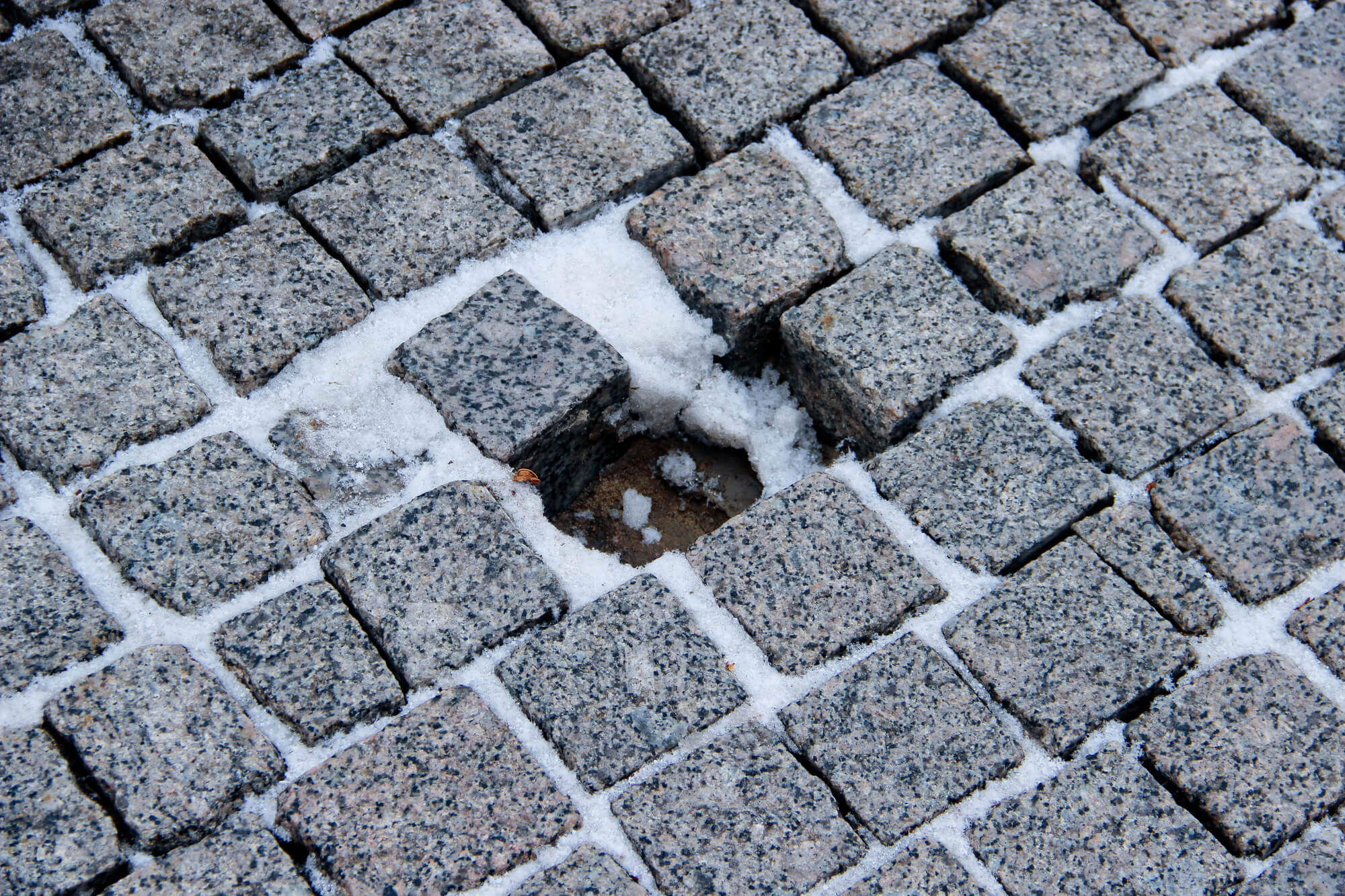
In severe cases, deterioration may appear as scaling, flaking, pitting, or salt fretting, where the surface gradually becomes rough or loses material.
Why Freeze-Thaw Cycles Matter
Concrete pavers used in cold climates must contend with repeated freeze-thaw cycles throughout the winter months. Conditions become more demanding when the pavement remains wet for extended periods or when water cannot drain effectively.
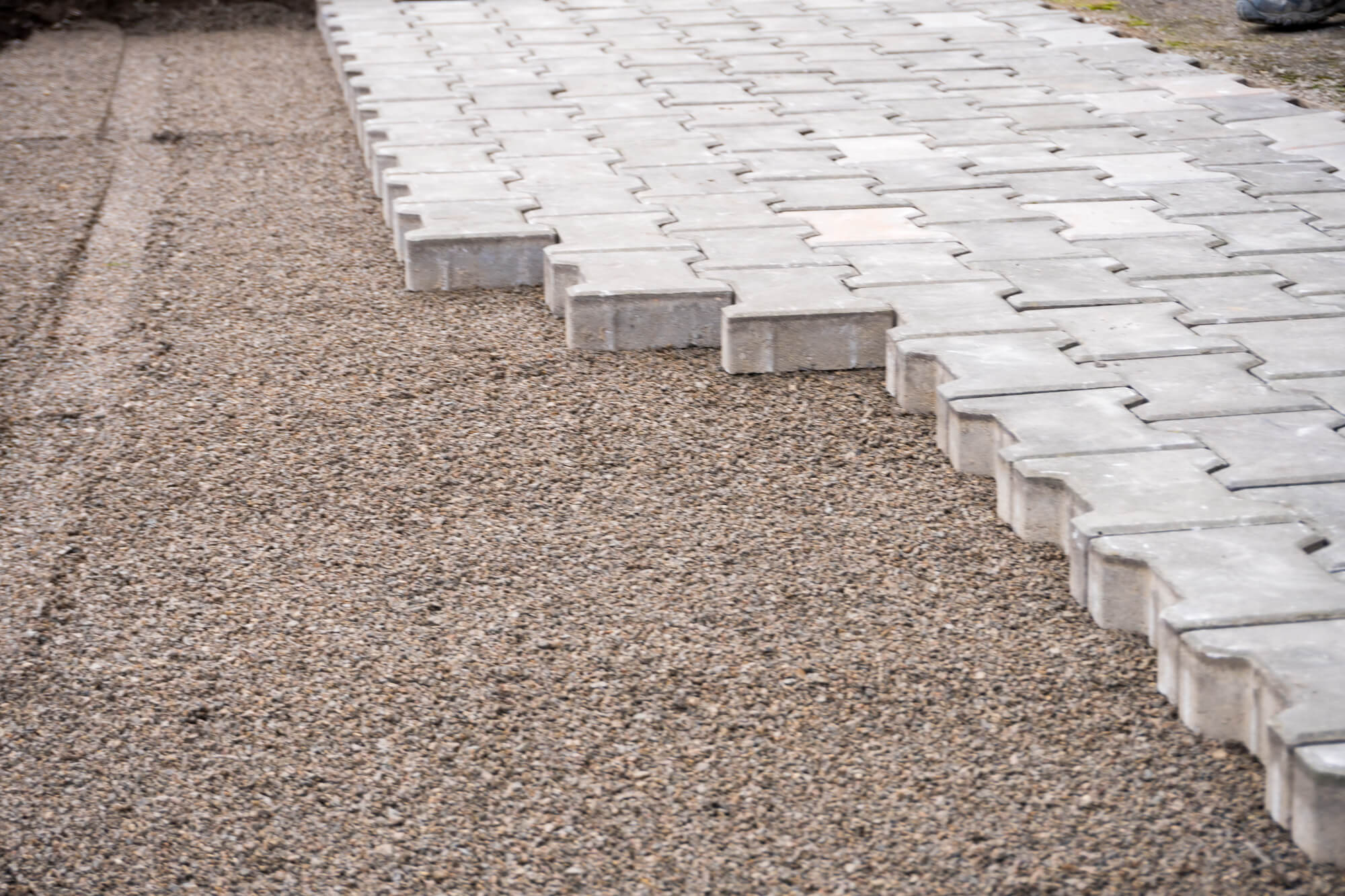
That’s why winter performance depends on more than the paver itself. Proper base installation, slope, drainage, joint materials, and ongoing maintenance all influence how water enters, moves through, and exits the pavement system.
Keeping the pavement from remaining unnecessarily saturated is one of the most important principles of cold-weather hardscape maintenance.
Are Any Ice Melt Products Safe for Pavers?
There is no universal “salt safe pavers” rule that applies to every concrete paving product and every installation.
That’s why Rochester Concrete Products recommends only using dry sand for traction and to avoid de-icing products as much as possible on their concrete pavers.
If you do need a deicer, check the recommendations for your specific pavers and ice melt product you’re using.
Common winter deicing products include sodium chloride, often sold as “rock salt”, as well as calcium chloride, magnesium chloride, and potassium chloride. These products have different characteristics and can perform differently depending on temperature and application conditions.
Nonetheless, all common deicing products have some sort of effect on concrete, so, regardless of the chloride-based deicer being considered, don’t assume that a product marketed as effective at melting ice is automatically harmless to concrete pavers.
Other chemicals require caution as well.
Products containing compounds such as ammonium sulfate or ammonium nitrate should not be used on a concrete paver installation using Rochester Concrete Products.
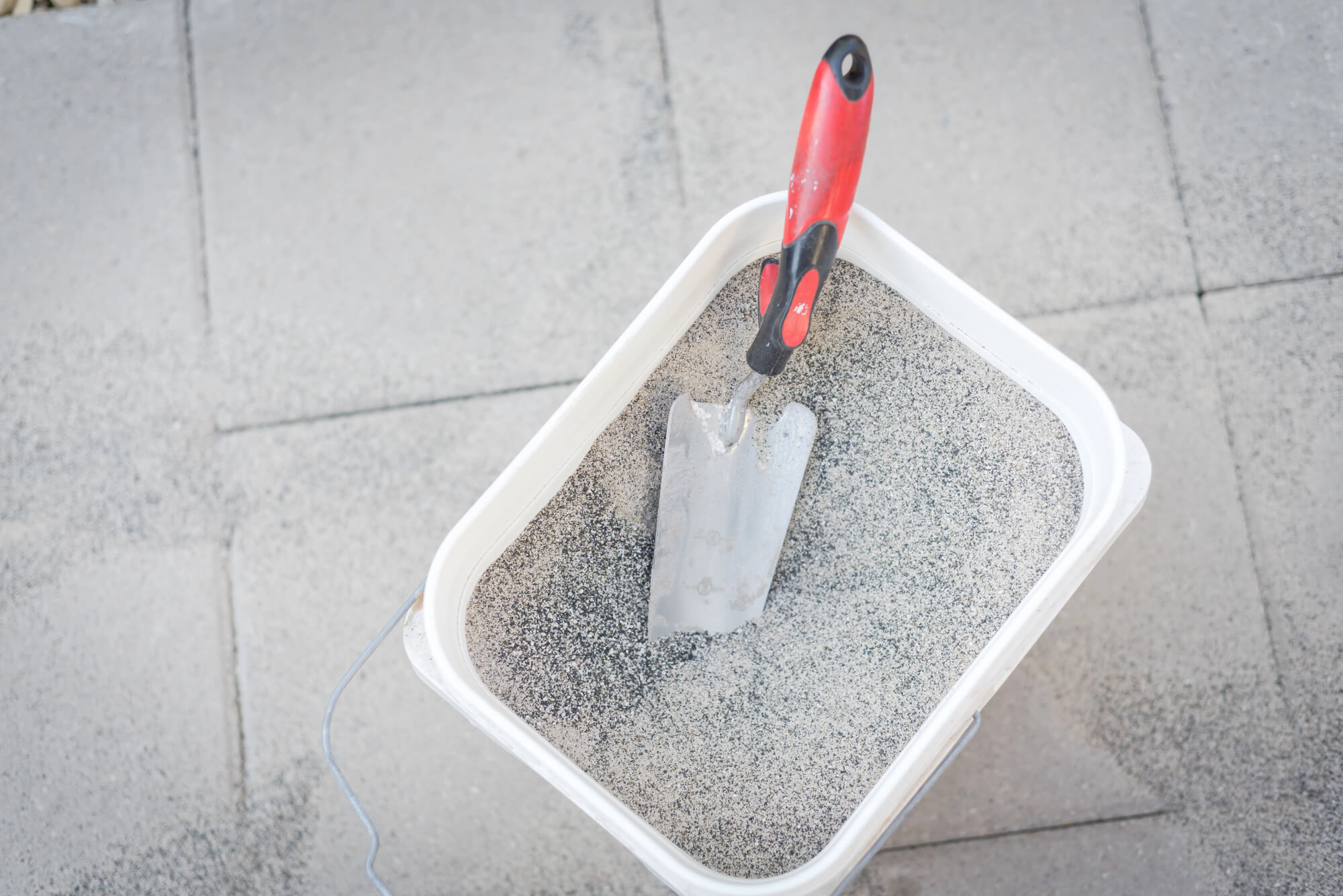
When the goal is simply to increase traction rather than melt ice, dry sand or another manufacturer-compatible abrasive may help reduce reliance on chemical deicers.
Comparing Rock Salt, Calcium Chloride, Magnesium Chloride & Other Deicers
| Deicing Product | What Homeowners Should Know |
| Sodium chloride/rock salt | Common and inexpensive; repeated or excessive exposure should be minimized |
| Calcium chloride | More effective at lower temperatures than ordinary rock salt, but still a chloride-based deicer |
| Magnesium chloride | Another chloride-based ice melt; should not automatically be assumed harmless to concrete |
| Potassium chloride | Less common; verify compatibility before use |
| Ammonium sulfate/ammonium nitrate | Avoid for concrete paver applications without manufacturer approval |
| Sand / abrasive mixes | Provides traction rather than melting ice and can reduce dependence on chemical deicers |
The safest approach is straightforward: use only compatible products, apply deicers sparingly, and follow the paver and deicer manufacturers’ recommendations.
How to Prevent Winter Salt Damage to Pavers
Good winter maintenance begins before large amounts of ice-melting products are needed.
Remove Snow Before It Becomes Compacted Ice
Remove snow promptly, whenever practical, to avoid deicers. Allowing snow to become packed down by foot or vehicle traffic can create a harder layer of ice and increase the amount of deicer needed later.
Use snow shovels, scrapers, snow blowers, and other equipment carefully. If snow plows or powered snow equipment are used, appropriate blade guards or similar protective components may help reduce direct contact between hard metal edges and the paver surface.
Avoid aggressive scraping that could chip edges or scratch the surface.
Use Deicer Sparingly
More salt does not necessarily mean better winter maintenance.
If you’re left with no choice, apply only the amount necessary according to the deicing product’s directions and the paver manufacturer’s recommendations. Avoid creating concentrated piles along joints, pavement edges, steps, or other areas.
When weather conditions improve, remove excess granular material when appropriate rather than allowing unnecessary concentrations to remain on the pavement.
For situations where additional traction is the main objective, an appropriate abrasive material, like simple dry sand, may be preferable to repeatedly applying more ice melt.
Keep Water Moving Off the Pavement
Good drainage matters throughout the year, but it becomes particularly important in cold climates.
Proper slope, base construction, drainage, and joint maintenance help manage the water created by rain, snow, and melting ice. Downspouts and other concentrated water sources should not continually discharge onto the pavement where practical.
Watch for low spots and areas where meltwater regularly collects and refreezes. Repeated ponding may indicate a drainage or pavement condition worth investigating rather than simply applying more deicer each time ice forms.
How to Recognize and Repair Deicing Salt Damage
A winter stain or white residue doesn’t automatically mean your concrete pavers are deteriorating.
Possible signs of actual surface distress include:
- Scaling or flaking
- Pitting or increasing surface roughness
- Cracking or material loss
- Repeated joint-sand loss
- Loose, shifted, or damaged pavers
- Deterioration that becomes progressively worse over multiple seasons
If you notice damage, begin by determining whether you’re dealing with a surface deposit, a damaged individual paver, or a larger pavement-system problem.
Clean the area using a method compatible with the paver, inspect drainage and moisture conditions, and restore jointing material where appropriate.
One practical advantage of segmental concrete paving is that individual units can often be removed and replaced when necessary without replacing the entire patio, driveway, or walkway.
Widespread scaling, movement, heaving, recurring joint loss, or other significant deterioration deserves evaluation by a qualified hardscape professional.
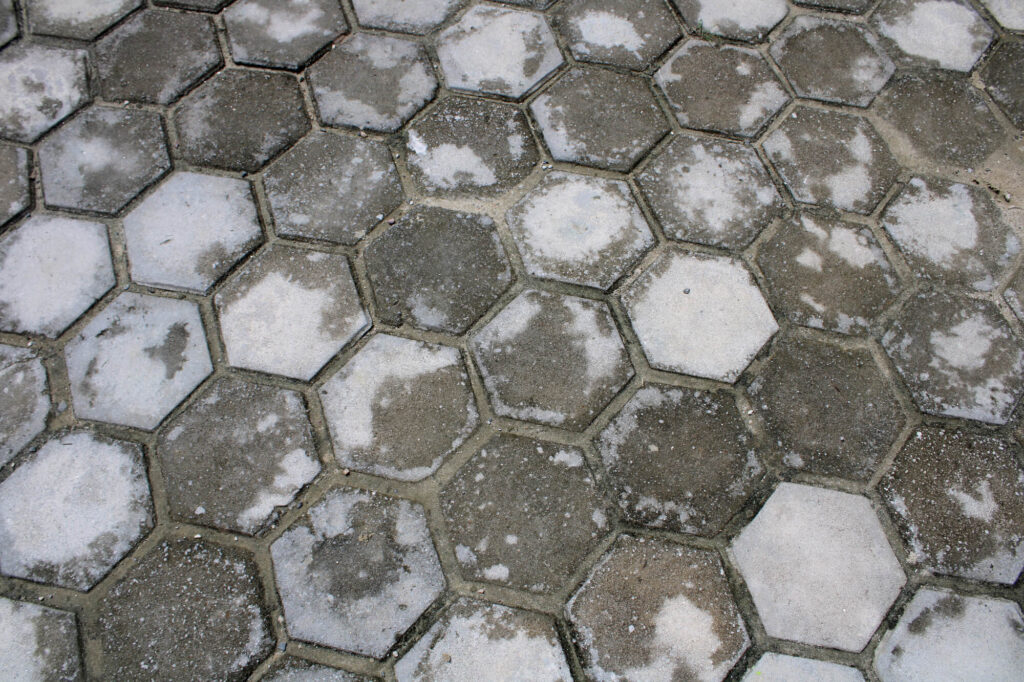
Is That White Residue Salt Damage or Efflorescence?
A white haze appearing on pavers after winter can easily be mistaken for damage from deicing salts. Sometimes, however, the white material is efflorescence.
Efflorescence develops when moisture dissolves naturally occurring water-soluble salts within concrete pavers or the surrounding pavement system and carries them toward the surface. When the water evaporates, the salts remain as a white, chalky, powdery, or crystalline deposit.
Although its appearance can be concerning, efflorescence on concrete pavers is generally a temporary cosmetic surface condition rather than evidence that the pavers are defective or structurally failing.
Cold and wet weather can make the condition particularly noticeable. Rain, snowmelt, repeated wet-dry cycles, slow drainage, and areas that remain damp provide additional opportunities for moisture to move through the pavement system.
A useful distinction is the condition of the surface itself:
- A dry white or light-gray haze without deterioration may indicate efflorescence.
- Scaling, pitting, cracking, or actual loss of concrete material deserves further investigation.
How to Remove Efflorescence From Pavers
Correct identification should come before cleaning.
For ordinary efflorescence, begin with the least aggressive method appropriate for the pavement:
- Allow the pavers to dry completely.
- Remove loose deposits with a stiff, non-metallic broom or nylon-bristle brush.
- If appropriate for the paver and jointing system, lightly rinse with clean, low-pressure water.
- Allow the surface to dry again before evaluating the result.
- If deposits persist, consider a concrete paver-safe efflorescence cleaner that is compatible with the specific pavement system.
Always follow the cleaner manufacturer’s testing, dilution, application, dwell-time, and rinsing instructions.
Avoid aggressive pressure washing that could disturb jointing material or alter the paver surface.
Improvised acid mixtures can also permanently affect the texture, color, jointing materials, or appearance of concrete pavers. Don’t assume a stronger chemical produces a better result.
For a deeper explanation of identifying and treating this condition, read Efflorescence on Pavers: What It Is, Why It Happens, and How to Remove It.
Should You Seal Pavers Before Winter?
Sealing may be appropriate for some paver systems, but a sealer should not be treated as a universal solution for winter salt exposure, poor drainage, or active efflorescence.
Before sealing, visible efflorescence and other contaminants should be appropriately addressed, and the pavers should meet the preparation and moisture requirements specified by the manufacturers.
Compatibility matters.
The appropriate sealer and application method can depend on:
- Type of paver
- Surface treatment
- Jointing material
- Existing coatings
- Environmental conditions
- Intended use
Never simply seal over active efflorescence in an attempt to hide it. Instead, identify the moisture condition, clean the surface as appropriate, allow it to dry as required, and follow the recommendations of both the paver and sealer manufacturers.
Chroma Shield+ for Concrete Pavers
Many concrete pavers from Rochester Concrete Products are enhanced during manufacturing with added protection, such as Chroma Shield+, a layer that reduces the impact of sunlight, weather, and many chemicals on the pavers’ color.
The added protection can save homeowners from needing to use sealers, depending on the application, load, environment, and other factors. However, it should be noted that it does not make the pavers impervious to regular deicing chemicals or avoid all cases of efflorescence.
Protect Your Paver Patio, Walkway, or Driveway All Winter
Preventing deicing salt damage to pavers is about managing winter conditions intelligently, so you don’t have to worry about constantly eliminating every snowflake, drop of water, or grain of salt.
Remove snow promptly, minimize unnecessary deicer use, use appropriate traction materials, keep drainage paths functioning, maintain the joints, and periodically inspect the pavement for developing problems. Safe alternatives to deicing salt include sand and kitty litter, and physical traction aids like sand provide slip resistance without damage, so use dry sand for traction instead of deicing products when possible. If you do need a quicker acting deicer for melting ice formed on the surface, apply a thin layer or light layer first, then another light layer if needed, rather than spreading a heavy dose all at once.
Not all deicing chemicals affect pavers the same way. Rock salt is safe for pavers if applied properly, and rock salt is less damaging to concrete than calcium chloride, with sodium chloride generally considered the least damaging deicing chemical for concrete among the common options. Calcium magnesium acetate is also considered a safe alternative deicer for pavers, especially de icing products marketed as specifically designed for use around concrete and jointing aggregate. Calcium chloride can be used on concrete pavers sparingly, but calcium chloride can cause significant deterioration in concrete pavers with repeated or heavy use, and magnesium chloride can cause severe chemical degradation over time, so it’s worth checking the label before reaching for whatever is on the shelf.
Deicing salt creates freeze-thaw amplification in paver materials, since expanding ice inside a paver’s pores drives potential freeze thaw degradation from the inside out. Deicing salts can cause scaling and flaking in concrete pavers, which is part of why keeping surfaces as dry pavement whenever possible, rather than letting meltwater sit and refreeze, matters just as much as which product you choose.
And remember that a white winter residue doesn’t necessarily mean your pavers have been damaged. Efflorescence is generally a cosmetic condition caused by moisture transporting soluble salts to the surface, while scaling, pitting, cracking, and material loss can indicate a different problem requiring closer evaluation.
A well-designed pavement system combines durable concrete pavers with appropriate base construction, drainage, jointing materials, and ongoing maintenance. Most concrete pavers are manufactured with very high compressive strength, which helps them resist the surrounding environment’s seasonal stress far better than poured concrete in many cold-climate applications, but maintaining durability over time still depends on proper care. Pavers professionally sealed with a high quality sealer add another layer of protection against moisture and salt intrusion, helping preserve the paver’s structural integrity through repeated freeze-thaw cycles. Those elements work together to help a patio, walkway, or driveway perform through the demanding freeze-thaw cycles of a cold-climate winter.
Rochester Concrete Products provides technical resources, installation information, product guidance, and local support to help homeowners, contractors, and dealers make informed decisions about concrete paver installation and long-term maintenance.
Explore RCP’s technical resources, contact your local RCP representative, or speak with a knowledgeable RCP dealer or qualified hardscape professional for guidance specific to your project.