You step outside to admire your new patio, walkway, or driveway and notice a white haze, chalky film, or powdery residue covering the surface of your pavers. It’s natural to wonder whether something has gone wrong with the installation—or worse, whether the pavers themselves are defective.
In most cases, efflorescence on pavers is a temporary and harmless surface condition, not a sign of product failure. It occurs when moisture within the pavement dissolves naturally occurring soluble salts and carries them to the surface. As the water evaporates, the salts remain behind as a white or light-colored deposit. The pavers themselves are typically unaffected, and the condition often becomes less noticeable over time.
This guide explains what efflorescence is, why it develops on concrete pavers, how to distinguish it from other white surface conditions, the safest ways to remove efflorescence, and when a recurring problem may indicate that the surrounding pavement system deserves a closer look.
Efflorescence on Concrete Pavers: What Is That White Powder on Pavers?
Efflorescence on concrete pavers is a naturally occurring phenomenon that appears as a white, chalky residue, powdery film, or crystalline deposit on the surface of a patio, walkway, driveway, or other hardscape. Efflorescence occurs when moisture dissolves naturally occurring water-soluble salts within the concrete mix, the finished pavers, or the surrounding pavement system, carries those salts to the surface, and then evaporates. As the moisture disappears, the salts remain behind as a visible white deposit, which may include calcium carbonate formed when dissolved calcium compounds react with carbon dioxide in the air.
Primary efflorescence typically appears during or soon after the initial installation as the concrete releases moisture. Secondary efflorescence develops later, often when recurring moisture from rainfall, irrigation, or poor drainage moves through the pavement system.
Although it can be alarming, efflorescence is usually a temporary surface condition rather than a sign that the pavers are defective or beginning to fail. In most cases, it affects appearance—not the structural integrity or long-term performance of the pavement.
Is Efflorescence a Product Defect?
Efflorescence is generally a cosmetic surface condition rather than evidence that a concrete paver is defective. It is often more noticeable on darker-colored pavers because the white deposits create greater visual contrast. In many installations, the appearance gradually becomes less noticeable over time as moisture movement through the pavement system decreases and the supply of water-soluble salts is reduced.
Rochester Concrete Products manufactures concrete hardscape products with an emphasis on consistent appearance, durability, and long-term performance. However, even properly manufactured concrete pavers can develop temporary efflorescence because the condition depends on the interaction of moisture, naturally occurring water-soluble salts, and site conditions—not on manufacturing alone.
Factors that commonly influence efflorescence include:
- Moisture moving through the pavers and supporting pavement system
- Naturally occurring water-soluble salts within concrete and other cementitious materials
- Temperature, humidity, evaporation, and drying conditions
- Base, bedding, jointing materials, and overall drainage design
- Irrigation systems, downspouts, nearby structures, or other sources of recurring moisture
Because efflorescence is influenced by the entire pavement system, no single product characteristic can completely prevent it. Installation practices, drainage, moisture exposure, jointing materials, and ongoing site conditions all affect when efflorescence appears, how visible it becomes, and how long it persists.
In many cases, efflorescence diminishes naturally through weathering. When removal is desired, use cleaning methods and efflorescence removers that are compatible with the specific paver system. If sealing is appropriate, it should only be considered after the efflorescence has been addressed and the pavers are clean, dry, and prepared according to both the paver and sealer manufacturers’ recommendations.
Why Efflorescence Can Appear on New Paver Installations
Efflorescence often becomes visible during the first several months after a concrete paver installation, while moisture is still moving through the pavers, bedding layer, aggregate base, and surrounding pavement system. As water travels through these materials, it dissolves naturally occurring water-soluble salts and carries them to the surface. When the moisture evaporates, the salts remain behind as a white haze, chalky film, powdery residue, or crystalline deposit.
A new patio or driveway may appear perfectly clean when the project is completed, only to develop efflorescence on pavers after periods of rain, irrigation, snowmelt, or changing weather conditions. The deposits are often more noticeable on darker-colored pavers because the white residue creates greater visual contrast.
Although the appearance can be frustrating, this is a common and generally temporary condition in concrete hardscapes. In many cases, the amount of visible efflorescence gradually decreases over time as moisture movement through the pavement system is reduced and the available water-soluble salts are depleted.
Common Moisture Sources That Contribute to Efflorescence
Before using an efflorescence remover, inspect the surrounding site for conditions that may be keeping the pavement system wetter than expected.
Common moisture sources include:
- Frequent rain, snowmelt, or repeated surface saturation
- Irrigation overspray or heavy watering near the paved area
- Downspouts or roof runoff discharging near the installation
- Low spots where water collects or drains slowly
- Shaded areas that remain damp for extended periods
- Base or subgrade conditions that retain moisture
- Nearby walls, steps, planters, or landscaping features that redirect water toward the pavement
When moisture repeatedly enters the pavement system and evaporates through the paver surface, it creates more opportunities for water-soluble salts to dissolve, migrate, and remain behind as visible white deposits.
Removing the surface residue may improve the appearance, but recurring efflorescence may continue until the source of excess moisture is reduced or corrected.
How Weather and Drying Conditions Affect Efflorescence
Temperature, sunlight, shade, humidity, and airflow all influence how quickly moisture evaporates from a concrete paver installation. Areas that receive direct sunlight often dry more quickly than shaded locations, while cool, damp conditions can slow evaporation and allow moisture to remain within the pavement system longer.
As a result, efflorescence may appear more heavily along foundations, below steps, adjacent to retaining walls, near landscape features, or in north-facing areas that receive less sunlight and remain damp for longer periods.
These patterns can provide valuable clues about how moisture is moving through the pavement system and where excess water may be entering or lingering. Identifying and correcting drainage issues, reducing unnecessary sources of moisture, and maintaining the pavement properly can help minimize recurring efflorescence over time. If a compatible sealer is being considered, it should only be applied after the efflorescence has been addressed and the pavers are clean, dry, and properly prepared according to the manufacturer’s recommendations.
How to Tell If The White Stain on Concrete Pavers Is Efflorescence
A white deposit or “white stain” on concrete pavers is not always efflorescence. Other conditions—including sealer blush, hard water deposits, construction residue, and certain types of surface staining—can produce a similar appearance.
While no single characteristic confirms efflorescence on its own, it typically has several distinguishing features:
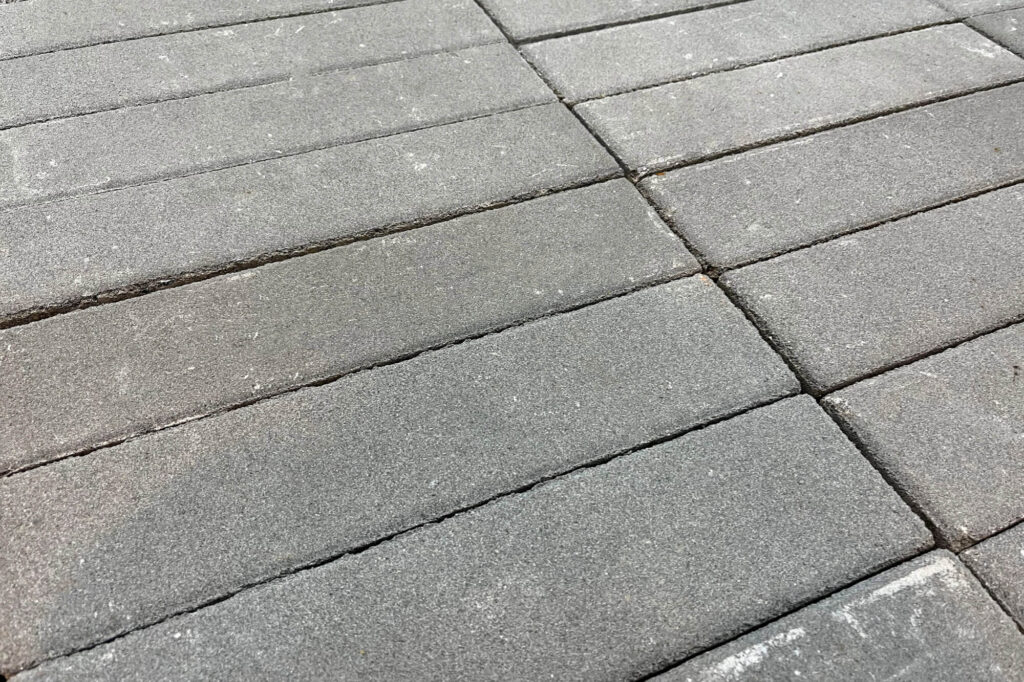
- A white or light gray powder, chalky film, haze, or crystalline deposit
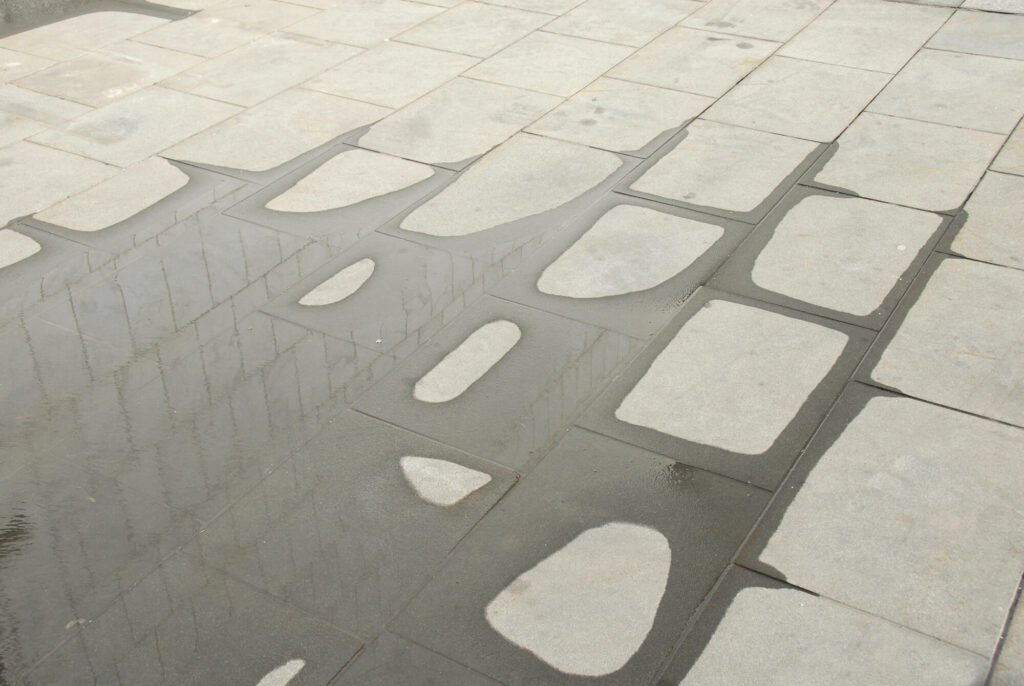
- It becomes much less noticeable when the surface is wet and reappears as the pavers dry
- It can often be partially removed with gentle dry brushing, although more persistent deposits may require an appropriate efflorescence cleaner
Use the comparison below as a starting point for identifying the most likely cause before selecting a cleaning method.
| Symptom | Possible Cause | First Step |
| Dry white powder or haze that becomes less visible when wet | Efflorescence | Dry brush gently; confirm product guidance before rinsing |
| Milky or glassy white patches after sealing | Sealer blush or trapped moisture | Stop resealing and contact the sealer manufacturer |
| Green, dark, or fuzzy growth | Algae, moss, or mildew | Use a cleaner labeled for organic growth and address moisture |
| Rust-colored spots or streaks | Metal, irrigation water, or mineral staining | Identify the source and use a stain-specific treatment |
| White crust concentrated around joints or edges | Mineral movement or recurring moisture | Review drainage, joint conditions, and water sources |
Quick Checks for Identifying Paver Efflorescence
Use these simple field checks to determine whether the residue is likely efflorescence—a surface deposit of water-soluble salts—rather than a sealer problem, stain, or another surface condition.
- Color: White to light gray with a chalky, powdery, or crystalline appearance.
- Texture: Dry, dusty, or lightly crusted rather than oily or sticky.
- Water response: Becomes much less noticeable when wet and reappears as the surface dries.
- Timing: Most common during the first several months after installation, although it can develop later if moisture conditions change.
- Pattern: Often follows joints, edges, shaded areas, drainage paths, or locations where moisture regularly enters or leaves the pavement system.
If the residue is dark, greasy, rusty, strongly bonded to the surface, associated with a specific spill, or accompanied by biological growth or surface deterioration, it is likely caused by something other than efflorescence and may require a different cleaning method or a professional evaluation.
Safe Efflorescence Removal for Concrete Pavers
Safe efflorescence removal begins with correctly identifying the white deposit and using the least aggressive cleaning method that produces an acceptable result. In many cases, simple dry brushing or normal weathering may be sufficient before stronger paver cleaning methods are considered.
Even after cleaning, a light haze may return following rain, irrigation, snowmelt, or other wet weather. This usually indicates that moisture is still moving through the pavement system and carrying naturally occurring water-soluble salts to the surface—not that the cleaning product has failed.
As moisture movement decreases and the supply of water-soluble salts is gradually depleted, recurring efflorescence typically becomes less frequent and less noticeable over time.
Start With Dry Brushing and Gentle Cleaning
Many efflorescence deposits become less noticeable with normal weathering and can often be reduced using simple, non-aggressive cleaning methods.
Before considering a specialty efflorescence cleaner, try the following steps:
- Allow the paver surface to dry completely.
- Remove loose residue using a stiff, non-metallic broom or a nylon-bristle brush.
- If appropriate for the specific paver and jointing system, lightly rinse the surface with clean, low-pressure water.
- Avoid directing water into the joints or using excessive pressure that could displace jointing material.
- Allow the pavement to dry completely before evaluating the results, since efflorescence becomes much less visible when wet.
- Continue to monitor the surface through several wet-dry weather cycles, as efflorescence often decreases naturally over time.
Avoid aggressive pressure washing, as it can remove jointing material, alter the surface texture of the pavers, or create an uneven appearance. If the pavers have been sealed or have a specialty surface treatment, always verify the manufacturer’s recommended cleaning procedures before proceeding.
When You Should Use an Efflorescence Cleaner
If efflorescence remains heavy or persists after normal weathering and gentle cleaning, a concrete paver-safe efflorescence cleaner may be appropriate.
These specialty cleaners are formulated to dissolve or loosen mineral deposits while minimizing the risk of surface damage when the manufacturer’s instructions for testing, dilution, application, dwell time, and rinsing are carefully followed.
Before Cleaning
- Confirm that the white deposit is actually efflorescence.
- Select a cleaner specifically labeled for the paver type and condition.
- Verify compatibility with any sealers, specialty surface treatments, and jointing materials.
- Review both the paver manufacturer’s recommendations and the cleaner manufacturer’s instructions.
- Test the complete cleaning process in a small, inconspicuous area.
- Allow the test area to dry completely before evaluating the results.
During Cleaning
- Follow all recommended dilution ratios, application methods, dwell times, and rinsing procedures.
- Protect nearby plants, metal surfaces, walls, and other finished materials.
- Control runoff in accordance with the cleaner manufacturer’s directions.
- Stop immediately if you observe unexpected color change, surface dulling, roughness, etching, or deterioration of the joints or paver surface.
Never assume that a stronger chemical or higher concentration will produce better results. Avoid improvised acid-cleaning mixtures or using muriatic acid, hydrochloric acid, or other harsh acids unless they are specifically recommended for the paver system and cleaner being used. Incompatible or improperly used acids can permanently alter the surface texture, color, and appearance of concrete pavers while damaging jointing materials.
If the test area produces unexpected results, discontinue cleaning, rinse as directed, and consult Rochester Concrete Products, the cleaner manufacturer, or a qualified hardscape professional before proceeding.
How Installation, Drainage, and Sealing Affect Paver Efflorescence
Efflorescence cannot always be prevented because it depends on naturally occurring water-soluble salts and moisture movement within the pavement system. However, good water management can often reduce how noticeable it becomes and how long it persists.
For homeowners, the following points provide helpful questions to discuss with a contractor. For contractors and installers, they serve as a practical moisture-management checklist.
Installation Details That Help Control Moisture
Installation practices influence how water enters, moves through, and exits the pavement system. Key considerations include:
- Slope and layout: Direct surface water away from buildings and other vulnerable areas.
- Drainage: Eliminate low spots where water can collect and provide a clear path for runoff.
- Base and bedding materials: Use materials appropriate for the application, soil conditions, anticipated loads, climate, and installation method.
- Compaction: Compact the base in accordance with accepted installation practices and project requirements.
- Edge restraints: Install suitable edge restraints to help maintain alignment and long-term pavement stability.
- Jointing materials: Install and activate joint sand or other approved jointing materials according to the manufacturer’s instructions.
- Downspouts and irrigation: Where practical, direct roof runoff, irrigation overspray, and other concentrated water sources away from the pavement.
- Transitions: Pay close attention to areas where pavers meet steps, retaining walls, foundations, planting beds, or other structures that may influence drainage.
Proper installation does not change the chemistry of concrete or eliminate the possibility of efflorescence. It does help manage the moisture conditions that influence when efflorescence develops, how noticeable it becomes, and how quickly it dissipates.
When Is It Safe to Seal Your Pavers After Efflorescence?
A sealer should not be viewed as a cure for active efflorescence. In most cases, sealers perform best only after visible deposits have been removed and the pavement has reached the moisture and preparation conditions recommended by the manufacturer.
Before applying a sealer:
- Remove visible efflorescence using an approved cleaning method.
- Confirm that all cleaning residues have been thoroughly rinsed or removed, as directed.
- Allow any required waiting periods following installation or cleaning.
- Verify that both the pavers and the jointing materials meet the manufacturer’s moisture requirements.
- Select a sealer that is compatible with the specific paver, any existing surface treatment, the jointing material, site conditions, and the intended application.
- Complete a small test area and allow it to cure before sealing the entire project.
The appropriate timing for sealing varies depending on the paver system, jointing material, weather conditions, moisture levels, and whether efflorescence is still active.
Always follow the preparation, compatibility, moisture, application, and curing instructions provided by both the paver manufacturer and the sealer manufacturer. When in doubt, confirm compatibility before proceeding.
How Contractors Should Explain Efflorescence to Homeowners
For contractors and dealers, efflorescence is as much a communication opportunity as it is a technical topic. Setting realistic expectations before installation helps prevent a temporary cosmetic condition from becoming an unnecessary customer concern.
Most homeowners have never encountered efflorescence. When a white haze appears on a new patio or driveway, it is understandable for them to wonder whether the pavers are fading, defective, or were installed incorrectly. A brief explanation before construction begins provides valuable context and helps customers recognize that efflorescence is a common, temporary characteristic of many concrete hardscape installations—not a sign of product failure.
What Contractors Should Explain Before Installation
Build homeowner confidence by setting expectations early and communicating consistently throughout the project.
Helpful best practices include:
- Discuss the possibility of efflorescence during the sales or planning process.
- Explain that it results from moisture carrying naturally occurring water-soluble salts to the surface.
- Reinforce that efflorescence is typically a temporary cosmetic condition rather than a structural concern.
- Avoid promising that efflorescence will never occur.
- Provide homeowners with a care guide that includes representative photos and basic maintenance recommendations.
- Give customers a clear point of contact if they have questions after installation.
A simple explanation might be:
“Concrete pavers can occasionally develop a temporary white surface deposit called efflorescence. It occurs when moisture carries naturally occurring water-soluble salts to the surface, where they remain after the water evaporates. In most cases, it is a temporary cosmetic condition rather than a sign of a problem. If it appears unusually heavy or is accompanied by settlement, scaling, or other signs of distress, we’re happy to evaluate it with you.”
For additional guidance, Rochester Concrete Products provides installation resources, technical documentation, and homeowner care information, including a seasonal paver maintenance guide, that contractors and homeowners can use as a trusted reference long after the project is complete.
Most efflorescence on concrete pavers is a temporary cosmetic condition that gradually becomes less noticeable through normal weathering or appropriate cleaning. In some situations, however, persistent or recurring efflorescence can be a sign that excessive moisture is continuing to move through the pavement system.
In cold climates, chronic saturation combined with repeated freeze-thaw cycles can place additional stress on an installation that has drainage, base, or other moisture-management deficiencies.
Signs the Hardscape System Needs Further Evaluation
Look beyond the white deposits if efflorescence is accompanied by any of the following conditions:
Evidence of excess moisture
- Standing water that remains after normal rainfall
- Heavy efflorescence that returns quickly after cleaning
- Downspouts, irrigation leaks, or other recurring sources of water
- Water entering from adjacent structures, retaining walls, or planting beds
Evidence of pavement movement or deterioration
- Settlement, heaving, spreading, or uneven pavers
- Jointing material that repeatedly washes out or is lost
- Failed or missing edge restraints
- Cracking, scaling, or other surface deterioration
Evidence of related building or surface conditions
- Heavy white streaking on walls, steps, or foundations
- Cloudy, milky, peeling, or uneven sealer
Cleaning away the visible deposits will improve the appearance, but it will not correct an underlying drainage, moisture, or pavement-construction issue.
A qualified hardscape professional can evaluate the installation for proper slope, drainage, base construction, joint conditions, edge restraints, and other factors that influence moisture movement. When conditions extend beyond the pavement system, additional evaluation by a drainage specialist, structural professional, or other qualified expert may be appropriate.
Get the Right Guidance for Your Paver Project
Efflorescence on concrete pavers is usually a temporary cosmetic surface condition caused by moisture carrying naturally occurring water-soluble salts to the surface. In most cases, it is not a sign that the pavers are defective or structurally failing.
Begin by correctly identifying the white deposits, then use the least aggressive cleaning method appropriate for the specific paver, jointing system, and site conditions. Avoid sealing over active efflorescence, using aggressive pressure washing, or applying improvised acid-cleaning mixtures that could permanently damage the pavement.
If heavy or recurring efflorescence is accompanied by standing water, settlement, cracking, scaling, recurring joint loss, or other signs of excessive moisture, the underlying drainage or pavement system should be evaluated rather than simply cleaned again.
Rochester Concrete Products offers technical resources, product guidance, and local support to help homeowners, contractors, and dealers make informed decisions about cleaning, sealing, installation, and long-term hardscape maintenance.
If you’re unsure of the best next step, explore RCP’s technical resources, contact your local representative, or speak with a knowledgeable RCP dealer or qualified hardscape professional.
The most effective way to manage efflorescence is to understand its cause. While the white deposits can usually be cleaned or will diminish naturally over time, proper installation, drainage, and moisture management are the keys to reducing future recurrence.